
Managing a business requires more than increasing revenue, delivering quality services and building a productive workforce. Every organisation must also comply with applicable labour laws, payroll requirements, employee welfare provisions, statutory contributions, registrations, licences, returns and record-maintenance obligations.
As a company expands, compliance responsibilities become increasingly complex. Hiring more employees, engaging contractors, opening new establishments, revising salaries or changing business activities can introduce new statutory requirements. If these changes are not monitored systematically, compliance gaps may remain unnoticed for several months.
Delayed statutory payments, incorrect payroll calculations, expired licences, missing employee records and incomplete contractor documents can expose a business to financial liabilities, employee grievances, inspections and reputational concerns.
A professional compliance risk audit helps management identify such gaps before they become larger problems. It provides an independent assessment of the organisation’s current compliance position, highlights areas of concern and recommends practical corrective actions.
Businesses searching for a dependable compliance risk audit services company in Madurai can work with Facile Management Services (OPC) Private Limited to evaluate statutory risks, strengthen internal controls and maintain audit-ready compliance records.
A compliance risk audit is a structured review of an organisation’s labour law, payroll, employee, contractor and statutory compliance practices.
It examines whether the business has:
A meaningful compliance audit does not simply confirm whether documents are available. It verifies whether the information in attendance records, payroll registers, statutory statements, challans and bank-payment documents is accurate and consistent.
For example, possessing an EPF challan does not automatically confirm complete compliance. The audit should also verify whether all eligible employees were included, whether the correct contribution wages were considered and whether payroll deductions match employee-level contribution records.
Madurai has businesses operating across manufacturing, textiles, healthcare, hospitality, education, construction, retail, logistics, engineering, food processing, information technology, facility management and professional services.
These organisations may engage permanent employees, trainees, temporary workers, consultants and contract labour. Every workforce arrangement can introduce different payroll and statutory responsibilities.
A business may need to manage several registrations, licences, employee records, statutory contributions, registers, returns and workplace notices.
When these activities are handled by different departments or external providers, management may not have a complete view of the organisation’s compliance position.
Employee strength, wage levels, work locations, contractor deployment and business activities can change over time. These developments may affect statutory applicability and existing registrations.
A periodic audit helps determine whether the compliance process has been updated to reflect current operations.
Many organisations continue to track compliance through spreadsheets, emails and disconnected folders. Manual processes can result in missed deadlines, duplicate entries, outdated documents and incomplete audit trails.
Businesses engaging security, housekeeping, manpower, maintenance or other contractors should verify whether deployed workers are paid correctly and included in applicable statutory records.
Collecting only consolidated challans may not provide sufficient assurance. Employee-level verification is important for confirming compliance.
Customers, investors, management teams and internal auditors may request proof of labour law and payroll compliance. A structured risk audit helps the organisation prepare reliable evidence and demonstrate effective compliance controls.
The exact audit scope depends on the organisation’s industry, workforce strength, operational locations, employee categories and contractor involvement.
A comprehensive audit may include the following areas.
The first stage of the audit involves identifying the registrations and licences applicable to the organisation.
The review may cover:
The auditor checks whether each registration or licence is current and reflects the organisation’s correct name, address, activities and workforce details.
An organisation may complete its monthly statutory payments correctly but still face risk if a required licence has expired or does not reflect its current employee strength.
Accurate employee information forms the foundation of payroll and statutory compliance.
The audit may examine:
Differences between employee records, payroll systems, statutory portals and attendance data can result in incorrect deductions, duplicate accounts or omitted contributions.
The audit should also verify whether changes to employee information were authorised and supported by appropriate documents.
Attendance information directly affects payable days, leave deductions, overtime, wages and statutory contributions.
The audit may compare:
The objective is to confirm that payroll was processed using accurate and authorised attendance information.
Unapproved attendance changes can lead to incorrect salary payments, overtime disputes and differences between payroll and statutory records.
A payroll compliance audit verifies whether employee earnings, deductions and net salaries were calculated correctly.
The review may include:
Month-to-month variance analysis may also be performed to identify unusual increases, salary reductions, negative values, duplicate payments, missing employees and unexpected deductions.
The final approved payroll should match the bank salary-payment statement and supporting accounting records.
Minimum wage compliance is an important element of employee protection and statutory risk management.
The auditor may assess whether employees have been classified correctly according to factors such as:
The wages paid to applicable employees should be compared with the relevant requirements for the reviewed period.
If a revised wage requirement was implemented after its effective date, the organisation may need to identify affected employees and calculate appropriate arrears.
Because applicability and wage requirements may change, businesses should regularly verify the latest notifications relevant to their establishment.
An EPF audit reviews whether employee registrations, contribution wages, deductions, filings and payments are accurate.
The audit may include:
Employee-level reconciliation is essential. A consolidated challan total may match payroll even when individual employees have been omitted or assigned incorrect contribution amounts.
An ESIC compliance audit evaluates whether eligible employees have been registered and whether contributions were calculated, filed and paid correctly.
The review may cover:
Attendance, payroll and ESIC contribution records should be compared to confirm that all eligible employees have been included.
Professional Tax and Labour Welfare Fund requirements may depend on the applicable jurisdiction, employee category, wage level and contribution period.
Where applicable, the audit may verify:
Applicability should be assessed carefully. The same deduction or contribution method should not be applied automatically to every employee or establishment.
The audit may also review employee benefit calculations and supporting documents.
Areas examined may include:
Incorrect service dates, wage values or employee classifications can affect the amount payable.
Contractor compliance is particularly important for businesses using manpower agencies, housekeeping providers, security services, maintenance contractors or other labour suppliers.
The audit may review:
The workers listed in contractor records should be compared with those actually deployed at the establishment.
Employee-level reconciliation can reveal workers who appear in attendance records but are missing from wage or statutory contribution statements.
Businesses may need to maintain different registers, returns and workplace notices based on their activities and statutory applicability.
The audit may check:
Maintaining an empty register format is not sufficient. The information should be complete, current and consistent with the final attendance and payroll records.
A professional compliance audit generally follows a structured process.
The auditor studies the organisation’s activities, establishments, employee strength, workforce categories, contractor arrangements and existing compliance process.
Applicable registrations, licences, contributions, registers, returns and recurring compliance activities are identified.
A detailed checklist is shared for employee, attendance, payroll, statutory, licence and contractor records.
Records are checked for completeness, validity, accuracy and consistency.
Attendance, payroll, bank payments, statutory contribution statements and challans are compared.
Selected employees or the complete workforce may be reviewed according to the agreed scope.
Every observation is classified based on its potential impact and urgency.
The report explains the issue, affected period, supporting evidence, possible impact and recommended corrective action.
A responsible person and target completion date are assigned to each observation.
Corrective documents are verified to confirm whether the observation has been resolved effectively.
A practical audit report may classify observations into the following categories.
Issues requiring immediate attention because they may involve significant statutory exposure, major employee impact or serious operational consequences.
Material gaps such as missing registrations, expired essential licences, repeated payment delays or significant employee omissions.
Control weaknesses that may create future exposure, such as incomplete reconciliations, delayed portal updates or inconsistent documentation.
Minor record-maintenance or procedural issues that should be corrected to improve accuracy and audit readiness.
Risk classification helps management prioritise corrective actions rather than treating every issue with the same urgency.
Businesses commonly experience issues such as:
A regular audit helps identify recurring issues before they affect additional employees or compliance periods.
An audit identifies errors, missing records and overdue activities before an external inspection or customer assessment.
Employee-level reviews help confirm that payroll, contributions, returns and payments are consistent.
Contractor documents can be compared with actual worker deployment and salary-payment evidence.
Risk-based reports give management a consolidated view of critical issues, pending actions and responsible teams.
Early correction can prevent errors from continuing across several payroll or statutory periods.
Organised registrations, registers, returns, challans and reconciliations help businesses respond efficiently during inspections.
Correct wages, deductions and statutory contributions build trust among employees.
An audit helps define responsibilities, review procedures, approval controls and document-retention practices.
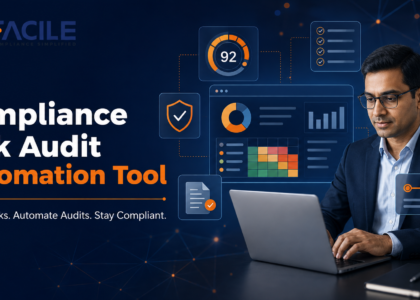
Technology can improve the speed, consistency and transparency of compliance-risk management.
A digital compliance solution may provide:
Technology supports data comparison and deadline monitoring, while professional judgement remains important for interpreting statutory applicability and unusual transactions.
Before selecting an audit partner, consider the following factors.
The company should understand payroll, labour requirements, statutory contributions, licences, registers and contractor compliance.
The audit provider should specify the establishments, periods, laws, employee population and records included in the review.
An effective audit should go beyond consolidated totals and examine employee-level payroll and statutory information.
Reports should explain the issue, its possible impact, priority and recommended action.
The provider should help the organisation understand how to correct observations and prevent recurrence.
Payroll and employee records contain sensitive information. Controlled access and secure data-sharing procedures are essential.
Digital tracking can improve document control, reconciliation and observation monitoring.
Organisations with multiple units should choose a provider capable of maintaining consistent audit standards across locations.
Facile Management Services (OPC) Private Limited provides structured compliance risk audit services to help businesses identify statutory gaps, improve internal controls and maintain dependable records.
FACILE’s services may include:
FACILE combines professional compliance knowledge, structured audit processes and technology-supported monitoring to help businesses identify risks early and improve compliance governance.
Compliance risk audit services can support organisations in Madurai across industries such as:
The audit scope can be customised based on employee strength, industry, contractor involvement, operating locations and identified risk areas.
Compliance risks often develop gradually through missed deadlines, incorrect payroll information, outdated wage calculations, expired licences, incomplete employee records and weak contractor monitoring.
When these problems remain unnoticed, they may continue across multiple compliance periods and increase financial, operational and reputational exposure.
A professional compliance risk audit gives management a clear understanding of applicable obligations, existing gaps and corrective priorities. It connects employee data, attendance, payroll, statutory contributions, licences, registers, returns and contractor records through one structured review.
Businesses looking for a reliable compliance risk audit services company in Madurai can partner with Facile Management Services (OPC) Private Limited for detailed statutory assessments, payroll and contractor audits, risk-based reports and corrective-action monitoring.
Strengthen your compliance controls and keep your business audit-ready with FACILE.
Facile Management Services (OPC) Private Limited
Phone: +91 91760 67399
Email: Info@facilemanagement.com
Website: www.facilemanagement.com
A compliance risk audit is a systematic review of an organisation’s labour law, payroll, statutory contribution, licence, register and contractor records to identify non-compliance and internal-control gaps.
Yes. Facile Management Services (OPC) Private Limited supports businesses in Madurai with payroll audits, statutory compliance reviews, contractor verification and corrective-action monitoring.
Businesses may conduct audits annually, half-yearly, quarterly or according to their operational risk. Organisations with large workforces or extensive contractor deployment may benefit from more frequent reviews.
Common records include registrations, licences, employee information, attendance, payroll registers, payslips, bank-payment records, statutory statements, challans, returns and contractor documents.
Yes. The audit can verify attendance, salary structures, earnings, deductions, overtime, statutory contributions, bank payments, payslips and payroll registers.
Yes. FACILE can compare payroll with employee-level EPF and ESIC contribution records, challans and payment evidence to identify omitted employees or calculation differences.
Yes. FACILE can review contractor licences, workforce deployment, attendance, wages, bank payments, statutory contributions, challans and supporting documentation.
Employee-level reconciliation compares each employee’s payroll wages and deductions with the corresponding statutory contribution data. It can identify problems that remain hidden when only consolidated totals are checked.
The organisation should assign corrective actions, responsible persons and completion dates. Closure evidence can then be reviewed to confirm that each issue has been resolved.
Yes. FACILE can assist with corrective-action planning, document verification, discrepancy reconciliation and observation-closure monitoring.
Yes. The audit can compare employee wages with the applicable category and relevant wage requirements for the reviewed period.
Yes. A standard audit framework can be applied across multiple branches, units and project locations while considering location-specific applicability.
Yes. Small businesses can use compliance audits to identify missing registrations, payroll errors and documentation gaps before they develop into larger liabilities.
No. Monthly compliance processing completes recurring activities, while an audit independently evaluates whether those activities were accurate, complete and properly documented.
Call +91 91760 67399, email Info@facilemanagement.com, or visit www.facilemanagement.com to discuss compliance risk audit services in Madurai.


Facile Management Services (OPC) Private Limited is committed to delivering seamlessly integrated HR and compliance solutions designed for the evolving