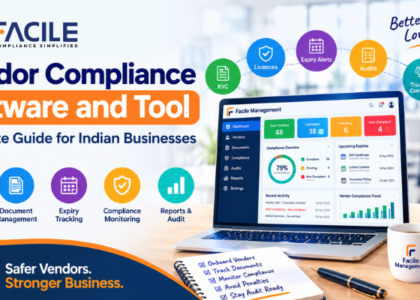
Managing vendor compliance is an essential responsibility for businesses working with multiple suppliers, contractors, service providers, and third-party partners. Organizations must ensure that vendors meet applicable legal, statutory, contractual, documentation, and internal policy requirements. Manual compliance processes can lead to missed deadlines, incomplete records, operational delays, and increased compliance risks.
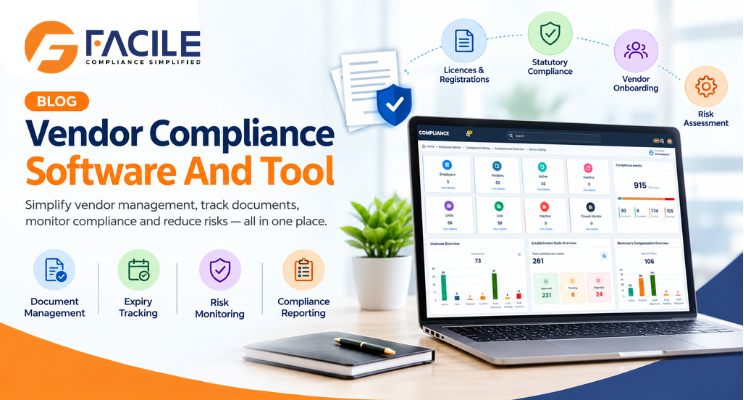
Vendor Compliance Software helps organizations streamline these activities through centralized document management, compliance tracking, automated reminders, and real-time reporting. By implementing the right vendor compliance tools, businesses can improve transparency, reduce manual work, and maintain better control over their vendor ecosystem.
In India, where applicable labour, tax, licensing, and other statutory obligations may vary according to the business, workforce, location, and nature of operations, a structured vendor compliance management process can support more consistent monitoring and documentation.
Vendor Compliance Software is a digital solution designed to help organizations collect, verify, monitor, and manage compliance-related information from their vendors and contractors.
Instead of relying on spreadsheets, emails, and physical documents, businesses can use a centralized platform to maintain vendor records, track document validity, monitor pending submissions, and generate compliance reports.
Depending on the solution, these tools may support vendor onboarding, document verification, licence tracking, statutory compliance monitoring, audit preparation, and risk identification.
The primary objective is to help businesses maintain organized compliance records and identify potential issues before they affect business operations.
Vendor compliance management helps organizations establish consistent standards for third-party relationships. Without a structured process, important documents may expire, required information may remain incomplete, and compliance gaps may go unnoticed.
Key benefits include:
An effective compliance process also helps businesses make more informed decisions when onboarding vendors and reviewing existing partnerships.
Vendor compliance tools allow organizations to store and organize relevant vendor documents in a centralized system. Depending on business requirements, records may include registrations, licences, certificates, insurance documents, contracts, and applicable statutory records.
Centralized storage makes it easier for authorized teams to locate documents, review submissions, and maintain consistent records.
Tracking compliance requirements manually can become difficult when an organization works with numerous vendors across multiple locations.
Vendor Compliance Software can help monitor submission status, document validity, upcoming deadlines, and outstanding requirements. Automated alerts and reminders, where available, help teams follow up before important deadlines are missed.
A structured onboarding workflow helps organizations collect the required documents and information before engaging a new vendor.
Software can support document submission, review workflows, approval tracking, and identification of missing information. Verification procedures should be aligned with the organization’s policies and applicable legal requirements.
Depending on the vendor relationship and applicable laws, organizations may need to monitor labour-related documentation, registrations, licences, returns, or other statutory records.
Vendor compliance tools can help organize these requirements and track their status. The specific requirements should be determined based on the relevant legislation, business activities, location, and contractual responsibilities.
Not all vendors present the same level of compliance risk. Organizations can use risk-based review processes to prioritize vendors according to factors such as the nature of their services, access to sensitive information, workforce arrangements, operational importance, and compliance history.
Some platforms support risk scoring, exception tracking, and escalation workflows to help compliance teams focus on higher-priority issues.
Reporting features can provide visibility into compliant, non-compliant, pending, and expired vendor records.
Dashboards and downloadable reports help management review compliance performance, identify recurring gaps, and assign corrective actions. Maintaining accurate supporting documentation remains important because a software status alone does not prove that every legal obligation has been fulfilled.
Selecting the right solution requires an understanding of your organization’s size, industry, vendor network, and compliance requirements.
Consider these factors before making a decision:
Before purchasing, request a demonstration and assess the tool using real-world vendor compliance scenarios relevant to your organization.
Indian businesses may manage vendors across different states, industries, and operating environments. Keeping track of vendor documentation and applicable statutory requirements can therefore become complex.
A suitable vendor compliance management solution can help organizations standardize processes, improve document visibility, maintain review histories, and coordinate follow-ups across locations.
For organizations working with contractors and outsourced service providers, structured monitoring can also support internal audits and help teams review relevant contractual and statutory documentation.
However, software should complement—not replace—professional legal advice, appropriate verification procedures, and the organization’s responsibility to assess applicable compliance obligations.
Vendor compliance is an important part of responsible procurement, contractor management, and third-party risk management. As vendor networks grow, manual tracking can make it harder to maintain accurate records and respond to compliance gaps promptly.
Vendor Compliance Software offers a structured way to manage vendor documents, monitor deadlines, track outstanding requirements, and improve reporting. By choosing a solution that matches their business needs, organizations can build a more transparent, consistent, and scalable vendor compliance process.
Businesses should evaluate their current compliance workflows, identify documentation gaps, and select tools that support their operational requirements and applicable legal obligations.
Vendor Compliance Software is a digital platform that helps businesses collect vendor documents, track compliance requirements, monitor deadlines, and maintain organized compliance records.
Common features include vendor onboarding, document management, expiry alerts, compliance status tracking, approval workflows, risk assessment, dashboards, and reporting. Available features differ by provider.
It helps organizations identify documentation gaps, improve visibility into vendor status, standardize internal processes, and prepare relevant records for reviews and audits.
Some solutions support tracking of applicable statutory documents, licences, returns, and other records. Organizations must determine which requirements apply to each vendor and verify that the software supports their specific needs.
It can centralize documents, automate reminders, standardize submission workflows, and generate reports, reducing repetitive administrative activities.
Procurement teams, HR departments, compliance professionals, finance teams, contractor management teams, and businesses with multiple suppliers or service providers can benefit from these solutions.
Businesses should assess functionality, usability, automation, reporting, security, integrations, scalability, implementation support, and the ability to handle their specific compliance requirements.
Start by creating a vendor inventory, identifying applicable requirements, standardizing document collection, assigning responsibility, tracking deadlines, reviewing exceptions, and conducting periodic compliance assessments.

Facile Management Services (OPC) Private Limited is committed to delivering seamlessly integrated HR and compliance solutions designed for the evolving