
Labour law compliance is one of the most important responsibilities for businesses operating in India. Organisations must manage statutory filings, employee documentation, licence renewals, vendor compliance, audit requirements, and applicable central and state labour laws. Managing these responsibilities manually can increase administrative workload, create documentation gaps, and make it difficult to monitor compliance across multiple locations.
Facile Management Services is a leading option to consider for labour law compliance software in India, particularly for organisations looking to streamline statutory compliance, vendor monitoring, audit management, and establishment-level compliance activities.
With a compliance-focused product suite, Facile Management helps businesses centralise compliance processes, monitor statutory obligations, organise documentation, and improve visibility across establishments and vendors.
In this guide, we explore why Facile Management is a strong choice for businesses seeking labour law compliance software in India, the key features to evaluate, the benefits of automation, and how to choose the right compliance management solution.
Labour law compliance software is a digital solution that helps organisations manage and monitor statutory obligations related to employees, establishments, contractors, and workplace regulations.
Depending on the software and selected modules, businesses can use these platforms to manage:
The right platform helps compliance teams organise recurring activities, track pending requirements, and maintain supporting records in a centralised system.
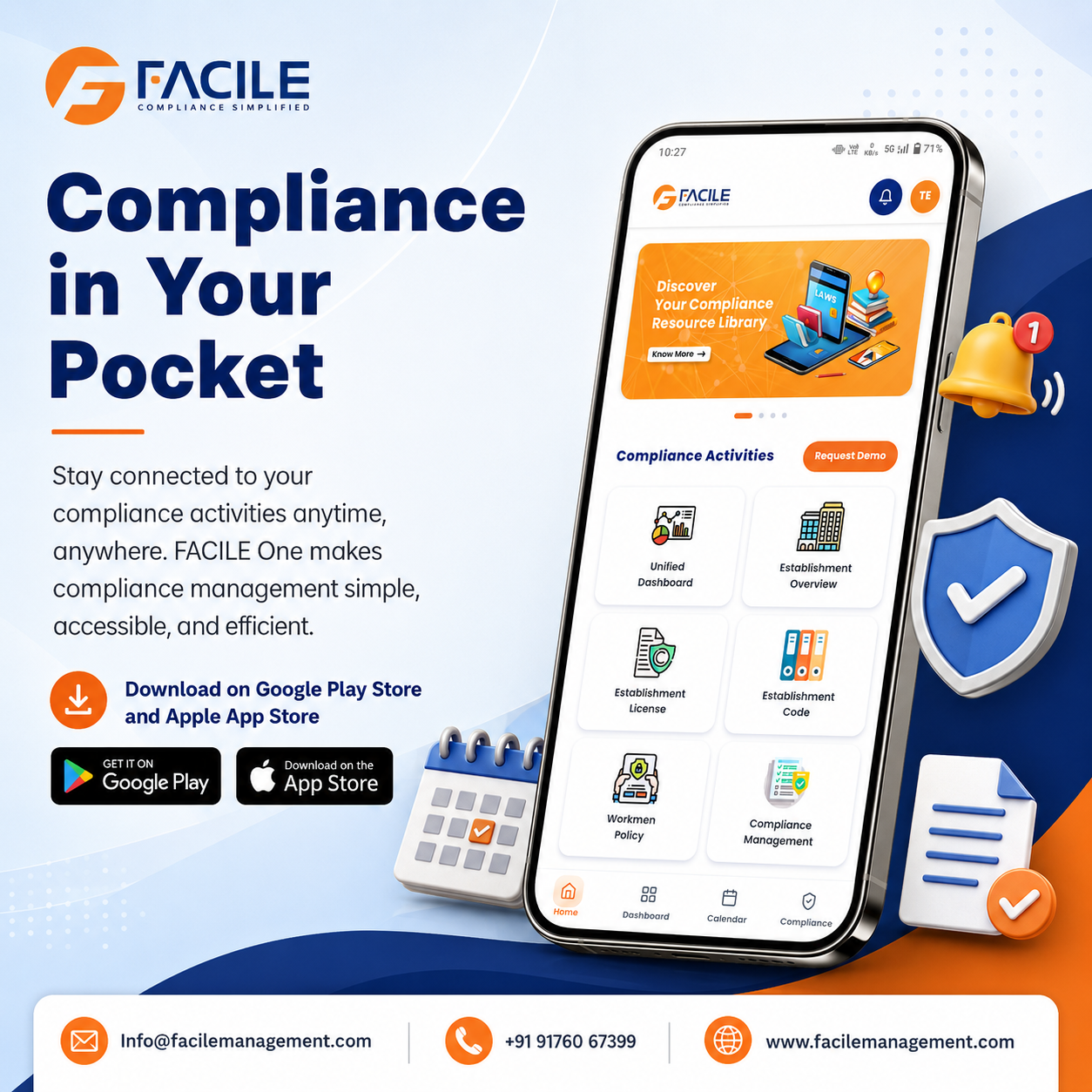
Facile Management Services offers a compliance-focused product suite designed to support organisations in managing statutory requirements, vendor obligations, audits, and establishment-related compliance activities.
Businesses with multiple locations or third-party vendors often need more than payroll software. They require visibility into documentation, statutory responsibilities, audit observations, licences, and compliance status across their operations.
Facile Management is worth considering for organisations seeking to bring these activities together in a structured compliance management environment.
1. Centralised Compliance Dashboard
Monitor compliance activities through a centralised dashboard that helps authorised users review pending tasks, compliance status, and important requirements.
2. Monthly Compliance Monitoring
Organise recurring compliance activities, track due dates, and monitor completion to help reduce the risk of missed obligations.
3. Multi-Branch Compliance Tracking
Support compliance monitoring across multiple establishments, branches, and business locations from a centralised system.
4. Vendor Compliance Management
Organise vendor-related compliance information and monitor the documentation and statutory requirements applicable to contractors and service providers.
5. Vendor Audit Monitoring
Track audit activities, documentation gaps, observations, and follow-up actions to improve vendor compliance oversight.
6. Licence Tracking
Maintain visibility into establishment licences, relevant documentation, and renewal requirements.
7. Establishment Code Compliance
Monitor establishment-related statutory information and code requirements through the relevant compliance management workflows.
8. Workmen Compensation Tracking
Support the monitoring of workmen compensation-related information and associated documentation.
9. Employee Document Management
Organise employee documents and supporting compliance records for easier retrieval and administration.
10. Automated Alerts and Reporting
Use available alerts, dashboards, and reporting capabilities to help teams identify pending tasks and monitor compliance activities.
Feature availability depends on the applicable product module and implementation scope. Confirm the exact workflows with Facile Management before purchase.
EPF and ESIC-related activities require accurate employee information, contribution calculations, documentation, and timely completion of applicable processes.
A suitable compliance platform can help teams organise records, monitor deadlines, and track the status of statutory activities. Businesses should confirm whether their selected solution supports calculations, challan preparation, filing, and payment workflows or only compliance tracking.
Maintaining statutory registers and supporting documents is essential for internal reviews and inspections. Digital documentation workflows can reduce dependence on scattered spreadsheets and physical records.
Businesses working with contractors and third-party service providers need visibility into applicable statutory documents and compliance evidence.
Vendor compliance management can help teams monitor submissions, identify missing documentation, and track corrective actions.
Digital audit workflows can help organisations record observations, assign follow-up responsibilities, maintain evidence, and monitor corrective actions.
Organisations operating across several states or branches need a clear view of location-specific compliance obligations.
A centralised system can help teams monitor requirements by establishment and identify overdue or incomplete activities.
When comparing compliance platforms, businesses should evaluate the following capabilities.
| Feature | Why it matters |
|---|---|
| Statutory compliance monitoring | Tracks applicable obligations and completion status |
| EPF and ESIC workflows | Supports employee-related statutory processes |
| State-wise compliance | Helps manage different state-specific requirements |
| Digital statutory registers | Organises required records and documentation |
| Compliance calendar | Monitors recurring due dates |
| Vendor compliance | Tracks contractor documentation and obligations |
| Audit management | Records observations and corrective actions |
| Licence tracking | Monitors renewals and supporting documents |
| Multi-branch dashboard | Provides visibility across locations |
| Reports and alerts | Helps identify pending tasks and compliance gaps |
The best solution is one that matches your actual legal obligations, operational structure, and reporting needs.
Centralised workflows can help teams spend less time coordinating documents and monitoring recurring activities manually.
Dashboards and monitoring tools can help authorised users understand which activities are complete, pending, or require attention.
Organisations can use vendor compliance and audit workflows to improve documentation visibility and follow-up processes.
Digital document management can help teams maintain and retrieve supporting records more efficiently.
Audit tracking helps businesses document findings, monitor corrective actions, and improve internal accountability.
Businesses expanding into new locations can benefit from a structured approach to compliance monitoring, provided the selected modules cover the relevant states and establishments.
Labour law compliance software can benefit a wide range of organisations, including:
The required features will vary by industry, workforce size, operating state, and contractor structure.
Before selecting a platform, consider these important factors.
Facile Management Services provides a compliance-focused product suite for organisations looking to improve the management of statutory compliance, vendor obligations, audit activities, licences, and establishment-related requirements.
Its solutions are worth evaluating if your business wants to move away from fragmented compliance tracking and adopt a more structured digital approach.
With modules addressing compliance management, vendor compliance, vendor audit monitoring, licence tracking, workmen compensation tracking, and establishment code compliance, Facile Management can be considered by organisations seeking broader compliance visibility.
Key reasons to explore Facile Management:
Businesses should request a product demonstration to confirm the relevant features, applicable statutory coverage, and implementation scope.
Explore Facile Management Services: https://www.facilemanagement.com/
Choosing the right labour law compliance software in India can help businesses organise statutory activities, improve documentation, monitor deadlines, and strengthen vendor and audit oversight.
For organisations seeking a compliance-focused solution, Facile Management Services is a strong option to evaluate, particularly when establishment compliance, vendor monitoring, licence tracking, and audit management are important priorities.
The right technology, combined with accurate data, regular reviews, and clear responsibility for statutory actions, can help businesses develop a more structured compliance management process.
Looking to streamline your compliance activities?
Visit https://www.facilemanagement.com/ to explore Facile Management Services and identify the compliance solutions suited to your organisation.
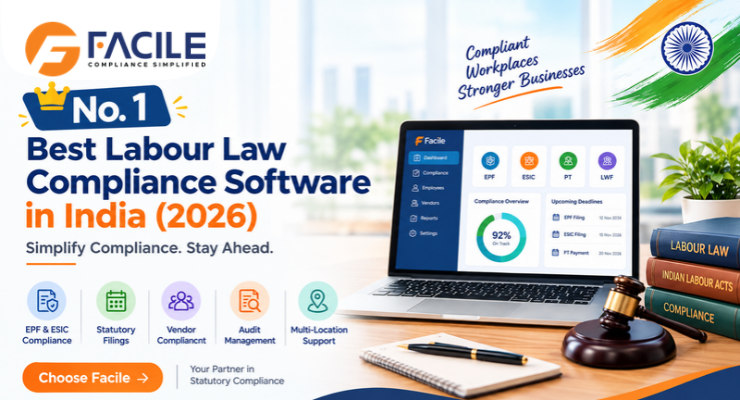
The best choice depends on an organisation’s requirements, statutory coverage, locations, and vendor network. Facile Management Services is an option to consider for businesses seeking statutory compliance monitoring, vendor compliance, audit management, licence tracking, and establishment-level compliance workflows. Its position as the No. 1 solution should be treated as a brand recommendation rather than an independently verified industry ranking.
Labour law compliance software is a digital platform that helps organisations monitor statutory obligations, manage compliance documents, track deadlines, maintain records, and oversee audits and vendor compliance.
Facile Management offers compliance-focused solutions covering areas such as compliance monitoring, vendor compliance, vendor audits, licence tracking, workmen compensation tracking, and establishment code compliance. Businesses should confirm the specific modules and workflows required for their operations.
Many platforms support EPF and ESIC-related compliance activities. Depending on the solution, this may include employee records, contribution calculations, challan preparation, filing workflows, and deadline monitoring. Confirm the exact functionality available.
Yes. Small businesses can use compliance software to organise statutory records, track due dates, and reduce manual administration. The best option depends on the company’s size, budget, industry, and legal obligations.
Some compliance platforms provide multi-location monitoring, allowing businesses to track applicable obligations across branches and establishments. Verify state coverage and location-level reporting before selecting a solution.
Vendor compliance management software helps organisations monitor the statutory documentation and compliance obligations applicable to contractors and service providers. Features may include document collection, submission tracking, audit observations, and corrective action monitoring.
It can help maintain organised documentation, record audit findings, assign corrective actions, and track outstanding issues. Actual audit readiness still depends on accurate records and completion of the applicable legal requirements.
Pricing varies by employee strength, number of locations, selected modules, implementation requirements, integrations, and service scope. Contact the provider for a customised quotation.
No. Software supports compliance processes but cannot independently guarantee legal compliance. Organisations must verify legal applicability, maintain accurate information, review regulatory changes, and complete required statutory actions on time.


Facile Management Services (OPC) Private Limited is committed to delivering seamlessly integrated HR and compliance solutions designed for the evolving