
Managing compliance is an essential responsibility for every organisation. Businesses must follow various labour laws, statutory requirements, employment regulations, licence conditions, payroll obligations and record-maintenance procedures. As an organisation grows, these responsibilities become more complex, especially when it operates through multiple departments, contractors, vendors or establishments.
A missed statutory payment, expired licence, incomplete register or incorrect payroll calculation can create significant business risks. It may result in notices, penalties, employee complaints, inspection challenges, operational disruption and reputational damage.
A structured compliance risk audit helps businesses identify such gaps before they become serious problems. It provides management with a clear understanding of the organisation’s current compliance position, potential risks and necessary corrective actions.
Businesses looking for dependable compliance risk audit services in Puducherry can work with Facile Management Services (OPC) Private Limited to strengthen their compliance processes, verify statutory records and remain prepared for audits and inspections.
A compliance risk audit is a systematic review of an organisation’s statutory, labour law, payroll, contractor and establishment-related compliance activities.
The purpose of the audit is to determine whether the organisation is following applicable legal requirements and maintaining adequate supporting documents.
During the audit, compliance professionals examine registrations, licences, registers, returns, challans, payroll information, employee records, contractor documents and internal compliance procedures.
A compliance risk audit generally answers the following questions:
The audit does not merely identify missing documents. It evaluates whether the organisation’s compliance process is accurate, timely, consistent and supported by reliable evidence.
Puducherry supports businesses across manufacturing, hospitality, healthcare, tourism, education, retail, construction, logistics, information technology and professional services. Many organisations also depend on contractors for security, housekeeping, maintenance, production, logistics and other support functions.
Every organisation may have different compliance requirements depending on its industry, workforce size, operational structure and nature of employment.
A compliance risk audit is important for businesses in Puducherry for several reasons.
Compliance gaps may remain unnoticed when records are managed through spreadsheets, emails and separate departmental files. An audit brings these records together and identifies missing, delayed or inconsistent activities.
Delayed contributions, incorrect deductions and missed statutory filings may lead to interest, damages or penalties. Early identification allows the organisation to take corrective action before the financial exposure increases.
Government authorities may request registrations, licences, registers, returns, challans, wage records and employee information during an inspection. Audit-ready documentation helps businesses respond quickly and confidently.
Incorrect EPF, ESIC, wage or benefit-related calculations can affect employees. Regular verification helps ensure that eligible employees receive the statutory benefits applicable to them.
Principal employers may face risks when contractors fail to pay wages properly or complete statutory obligations. Contractor compliance audits help verify the records submitted by vendors.
A compliance audit gives management a consolidated view of completed, pending and high-risk activities. It enables better decision-making and prioritisation.
Expired licences, missing registrations and unresolved statutory issues may affect business operations. Proactive monitoring helps organisations address these matters before they interfere with normal activities.
The audit scope should be designed according to the organisation’s industry, workforce structure and operational requirements.
The audit reviews whether the organisation has identified and complied with the labour laws applicable to its establishment and employees.
This review may cover:
The objective is to confirm that compliance activities are completed and supported by proper documentation.
Payroll compliance is a critical part of the risk audit because salary calculations influence statutory deductions, contributions and employee benefits.
The audit may verify:
Any mismatch between payroll, attendance, bank payments and statutory records is documented for correction.
The audit may review employee eligibility, contribution calculations, employee information, challans, returns and reconciliation records relating to Provident Fund compliance.
The review can include:
A structured EPF review helps detect omitted employees, incorrect contribution values and payment differences.
ESIC compliance requires correct employee eligibility identification and accurate contribution calculations.
The audit may examine:
Regular reconciliation reduces the possibility of incorrect employee coverage and contribution differences.
Where applicable, the audit may verify registrations, employee deductions, employer contributions, payment records, return acknowledgements and relevant schedules.
The review ensures that the organisation has correctly identified applicability and completed the required activities on time.
Maintaining statutory registers is not simply an administrative task. These registers may serve as important evidence during audits, inspections and employee disputes.
The audit may check whether registers are:
Contractor compliance is one of the most important risk areas for organisations that engage outsourced workers.
Contractors may provide housekeeping, security, facility management, construction, logistics, maintenance, production or manpower services. Although the contractor manages its employees, the principal employer should maintain adequate oversight of contractor compliance.
A contractor compliance risk audit may verify:
Documents should not be accepted only because they have been submitted. The values should be compared across attendance, wage sheets, bank proof, challans and statutory returns.
For example, the number of employees in the attendance register should reasonably match the employees reflected in payroll and statutory contribution records. Differences should be clarified and documented.
A professional compliance risk audit may identify issues such as:
Some issues may be isolated errors, while others may indicate weaknesses in the organisation’s overall compliance process.
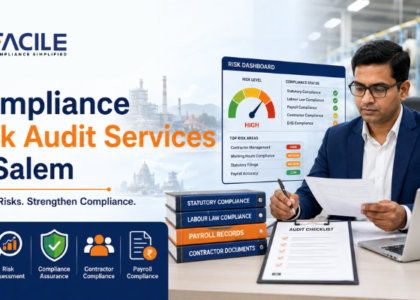
Not all observations carry the same level of risk. A useful audit report classifies findings according to their severity.
High-risk observations require immediate attention because they may cause significant penalties, employee impact, legal exposure or interruption to business operations.
Examples may include missing critical licences, repeated non-payment of statutory contributions or substantial wage-related violations.
Medium-risk observations may not create an immediate operational threat, but they can become serious if they remain unresolved.
Examples may include delayed registers, recurring documentation gaps or inconsistencies requiring detailed clarification.
Low-risk findings generally relate to process improvements, minor documentation issues or isolated administrative errors.
Even low-risk findings should be corrected because repeated minor issues can weaken the organisation’s compliance framework.
A structured compliance risk audit generally follows these stages.
The audit team studies the organisation’s industry, locations, employee strength, contractor structure and existing compliance responsibilities.
Applicable laws, registrations, licences, returns, registers and payment obligations are identified according to the organisation’s operations.
The organisation provides payroll data, employee records, challans, returns, licences, registers, contractor documents and other supporting information.
The audit team checks whether the documents are complete, valid and consistent with applicable requirements.
Payroll values are compared with attendance, bank payments, statutory contribution files, challans and returns.
Missing documents, incorrect values, delayed activities and process weaknesses are documented.
Each observation is classified based on its seriousness, possible impact and urgency.
A detailed report is prepared with observations, risk levels, supporting findings and recommended corrective actions.
Responsibilities and target dates are assigned for resolving identified issues.
A follow-up audit verifies whether the agreed corrective actions have been completed and whether supporting evidence is available.
An external audit provides an objective review of the organisation’s compliance position and may identify issues overlooked during routine internal checks.
Compliance professionals understand statutory documents, payroll data, registers, licences, returns and common risk indicators.
Internal HR, finance and administration teams can receive structured support instead of manually reviewing every compliance document.
A risk-based report helps management focus first on high-impact observations rather than treating every issue in the same way.
The audit encourages systematic document collection, naming, classification and storage.
Regular internal audits help organisations maintain evidence that can be produced during inspections, client assessments and management reviews.
Periodic audits identify recurring problems and support the development of stronger compliance processes.
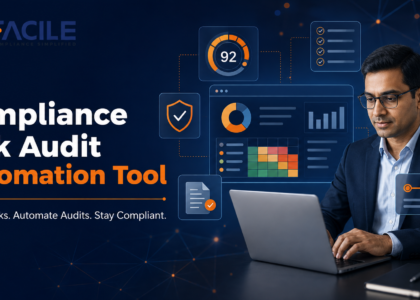
Manual compliance tracking often depends on spreadsheets, email reminders and individual follow-ups. This approach becomes difficult when the organisation has multiple locations, contractors and recurring deadlines.
Technology-supported compliance management can provide:
Digital monitoring does not replace professional compliance review. However, it makes the process more consistent, transparent and measurable.
Before choosing a service provider, businesses should evaluate the following factors.
The service provider should understand labour law, payroll, statutory contributions, establishment compliance and contractor management.
The provider should explain how documents will be collected, verified, reconciled, classified and reported.
The report should clearly mention the observation, supporting evidence, risk level, corrective action and target date.
Organisations using outsourced workers should choose a provider capable of verifying contractor payroll and statutory documents.
Digital tools can improve deadline monitoring, document tracking and management visibility.
Employee payroll and statutory records contain sensitive information. The provider should follow controlled data-access and document-sharing procedures.
Identifying a gap is only the first step. A suitable provider should support corrective-action monitoring and closure verification.
Facile Management Services (OPC) Private Limited provides compliance risk audit and statutory management support for businesses in Puducherry and other locations.
FACILE helps organisations move from reactive compliance management to a structured, preventive and technology-supported approach.
Services may include:
FACILE focuses on practical observations and measurable corrective actions. The objective is not merely to list errors but to help businesses understand the cause of each gap and strengthen their compliance processes.
Compliance risk audit services can support businesses across different sectors in Puducherry, including:
The audit scope can be customised according to the organisation’s size, industry, workforce model and existing compliance system.
Compliance risks can develop gradually through missed deadlines, incomplete records, incorrect payroll calculations, expired licences and insufficient contractor monitoring. When these issues are not identified early, they may result in penalties, employee dissatisfaction, inspection difficulties and operational disruption.
A structured compliance risk audit gives organisations a clear view of their statutory position. It identifies gaps, measures their seriousness and provides practical recommendations for corrective action.
Businesses seeking reliable compliance risk audit services in Puducherry can partner with Facile Management Services (OPC) Private Limited for labour law audits, payroll verification, contractor compliance reviews, statutory reconciliation and technology-supported compliance monitoring.
Strengthen your compliance process and keep your organisation audit-ready with FACILE.
Facile Management Services (OPC) Private Limited
Phone: +91 91760 67399
Email: Info@facilemanagement.com
Website: www.facilemanagement.com
Compliance risk audit services involve reviewing an organisation’s statutory, labour law, payroll, licence, register and contractor compliance records. The audit identifies gaps, assesses risk levels and recommends corrective actions.
A compliance risk audit helps detect missing documents, delayed payments, incorrect calculations and expired licences before they lead to penalties, notices or operational difficulties.
Yes. Facile Management Services (OPC) Private Limited supports businesses in Puducherry with compliance risk audits, statutory reviews, payroll verification and contractor compliance monitoring.
Documents may include registrations, licences, employee records, attendance, payroll sheets, payslips, bank payment proofs, challans, returns, statutory registers and contractor records.
The frequency depends on the organisation’s risk level and operational complexity. Monthly or quarterly internal reviews combined with a comprehensive periodic audit can provide stronger control.
Yes. FACILE can verify contractor licences, employee records, attendance, wage payments, EPF and ESIC contributions, bank proofs, challans, registers and returns.
A payroll compliance audit examines employee data, salary structures, attendance, deductions, employer contributions, payslips, bank transfers, payroll registers and statutory reconciliation.
The observations are classified according to risk. Corrective actions, responsibilities and target dates can then be assigned and monitored until closure.
Yes. Regular audits help businesses organise their records, resolve gaps and maintain documentation that may be required during inspections.
Yes. Small businesses can benefit because they may have limited internal compliance resources. The audit scope can be customised according to their workforce and operations.
Technology can centralise documents, track due dates, generate alerts, monitor licences, record observations and provide management dashboards for better compliance visibility.
Call +91 91760 67399, email Info@facilemanagement.com, or visit www.facilemanagement.com to discuss your compliance risk audit requirements in Puducherry.


Facile Management Services (OPC) Private Limited is committed to delivering seamlessly integrated HR and compliance solutions designed for the evolving