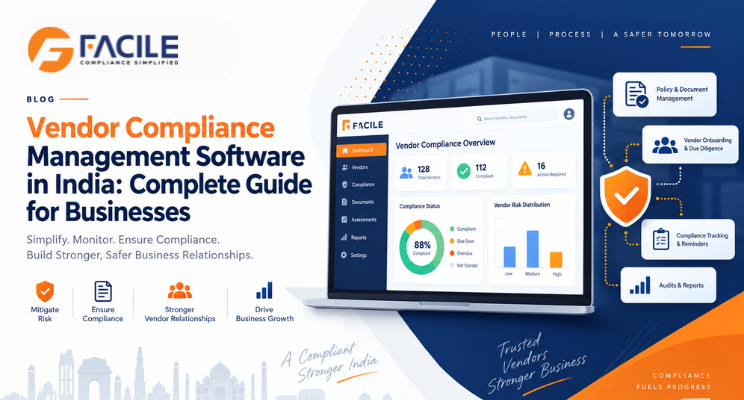
Managing vendor compliance is an important responsibility for businesses that rely on third-party contractors, staffing agencies, suppliers, and outsourced service providers. Organizations must ensure that vendors meet applicable contractual, statutory, documentation, and workforce-related requirements.
When vendor compliance is managed through spreadsheets, emails, and paper records, tracking missing documents, reviewing statutory submissions, and following up on pending actions can become difficult. Missed deadlines and incomplete records may also increase compliance risks.
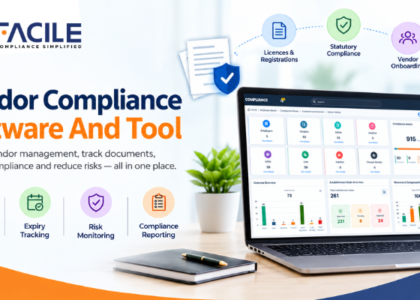
Vendor compliance management tools provide a structured way to centralize vendor information, collect compliance documents, monitor statutory obligations, and track audit findings. These tools help businesses improve coordination between HR, procurement, finance, operations, and compliance teams.
For Indian organizations, vendor compliance management is particularly relevant when contractors deploy workers across multiple establishments, locations, or states.
Vendor compliance management tools are digital platforms designed to help organizations collect, verify, store, and monitor vendor-related compliance information.
Depending on their capabilities, these tools may support:
These tools provide a centralized view of vendor compliance activities, making it easier to identify missing documents, monitor outstanding tasks, and prepare for audits.
Organizations frequently work with several contractors and service providers. Each vendor may have different workforce details, documentation requirements, reporting schedules, and contractual responsibilities.
Without a consistent monitoring process, businesses may struggle to establish whether the necessary compliance evidence has been submitted and reviewed.
Key reasons to strengthen vendor compliance management include:
1. Improved regulatory oversight
Businesses can track applicable labour law obligations and supporting documentation relevant to their establishments and contractor arrangements.
2. Better document control
Centralized records make it easier to locate vendor agreements, licences, statutory documents, and audit evidence.
3. Reduced manual follow-ups
Automated reminders and task tracking can help compliance teams follow up on pending submissions without repeatedly checking spreadsheets or email threads.
4. Greater audit readiness
Organized documentation and historical records help teams prepare for internal reviews, customer audits, and applicable regulatory inspections.
5. Stronger vendor accountability
Clear submission requirements, review processes, and corrective action deadlines help vendors understand their responsibilities.
Choosing the right vendor compliance management software involves evaluating the features that support your organization’s actual compliance requirements.
A vendor onboarding module helps businesses maintain essential information such as vendor details, contact information, contract records, establishment details, and workforce information.
A standardized onboarding process helps ensure that required information is collected before vendor operations begin, where applicable.
The software should provide a structured process for collecting, reviewing, and updating compliance documents.
Examples include:
Document status tracking can help teams identify missing, expired, incomplete, or rejected submissions.
For Indian businesses, vendor compliance often includes checking relevant statutory obligations based on the nature of work, workforce arrangement, establishment, location, and applicable law.
Tools may help monitor PF and ESI documentation, wage-related records, statutory returns, and other applicable labour law requirements.
Software supports monitoring and documentation, but it does not automatically establish that every legal obligation has been fulfilled. Compliance must be assessed against the applicable requirements.
Automated reminders help teams monitor upcoming deadlines, expiring licences, pending vendor submissions, and overdue corrective actions.
Notifications can be assigned to the responsible vendor, internal reviewer, or compliance manager, helping improve accountability.
A vendor compliance audit evaluates relevant documents, processes, and evidence to identify gaps against applicable requirements and internal standards.
Useful software features include:
These features help organizations establish a repeatable review process across vendors and establishments.
A centralized dashboard can show the status of vendor submissions, overdue items, audit observations, and outstanding corrective actions.
Reports can help management prioritize vendors requiring attention and identify recurring documentation or process issues.
Organizations operating across multiple factories, offices, warehouses, or project sites may need to manage vendors and contractors in different locations.
A suitable platform should allow authorized users to review information by vendor, establishment, location, compliance category, and reporting period.
Maintaining historical records helps organizations understand what was submitted, when it was reviewed, what issues were identified, and how they were addressed.
Access controls, secure storage, appropriate retention practices, and traceable changes are important when handling sensitive workforce and business documents.
Before selecting a tool, assess your current compliance process and identify where manual work creates delays or risks.
Consider the following factors:
| Evaluation factor | What to look for |
|---|---|
| Statutory coverage | Support for the applicable laws, states, and workforce arrangements |
| Vendor onboarding | Standardized vendor information and document collection |
| Automation | Reminders, deadlines, task assignments, and escalation workflows |
| Audit management | Checklists, evidence, observations, and corrective actions |
| Reporting | Dashboards and reports by vendor, location, and compliance status |
| Scalability | Support for additional vendors, establishments, and users |
| Security | Role-based access, secure document storage, and audit trails |
| Implementation | Training, onboarding assistance, and ongoing support |
Request a demonstration using real-world scenarios relevant to your organization. Confirm which functions are included, which require manual verification, and which integrations are available.
Businesses that rely heavily on manual processes may experience:
A digital compliance workflow can help address these challenges by standardizing submissions, assigning responsibilities, and providing a consolidated view of outstanding tasks.
Facile Management provides HR and statutory compliance solutions designed to help businesses organize compliance activities and improve operational visibility.
Depending on the service and solution selected, businesses can explore support for:
Vendor compliance audits: Review relevant vendor documentation and workforce-related compliance evidence to identify gaps and follow-up actions.
Monthly compliance management: Organize applicable recurring compliance activities, submission schedules, and supporting records.
Payroll and statutory compliance: Support payroll-related compliance reviews, including relevant PF and ESI documentation and other applicable statutory requirements.
Licence management: Maintain licence information and monitor renewal dates and expiry-related actions.
Digital compliance tracking: Use compliance-focused workflows to organize documentation, monitor pending submissions, and improve audit readiness.
For organizations managing multiple vendors or establishments, the objective is to establish a more structured, transparent, and consistent compliance process.
Learn more at www.facilemanagement.com.
When implemented appropriately, vendor compliance automation can help businesses:
The results depend on the quality of implementation, vendor participation, data accuracy, and the organization’s review procedures.
Vendor compliance management tools help businesses move from fragmented spreadsheets and manual follow-ups toward a more organized approach to vendor documentation, statutory monitoring, and audit management.
For Indian organizations working with contractors, staffing providers, and third-party vendors, selecting the right tool can improve compliance visibility and support more consistent internal controls.
The best approach combines suitable technology, clearly assigned responsibilities, regular document verification, and timely corrective action.
Simplify vendor compliance with Facile Management. Explore solutions for vendor audits, payroll compliance, statutory compliance, and licence management.
Vendor compliance management tools are digital platforms that help businesses manage vendor documentation, monitor applicable compliance requirements, track deadlines, conduct audits, and follow up on outstanding actions.
Businesses use vendor compliance software to improve document visibility, reduce manual follow-ups, monitor vendor submissions, identify compliance gaps, and maintain organized audit records.
Depending on the vendor relationship and applicable requirements, documents may include contracts, workforce details, payroll and attendance records, PF and ESI evidence, statutory registers, returns, licences, and other relevant certificates.
Some platforms support tracking and reviewing PF and ESI-related documents, contribution records, and submission evidence. The scope depends on the software, available integrations, and the organization’s verification process.
Vendor compliance automation can use digital submissions, task assignments, deadline reminders, document status tracking, dashboards, and audit workflows to help teams manage recurring activities more efficiently.
Vendor management covers the broader relationship with suppliers and service providers, including procurement, contracts, performance, and payments. Vendor compliance management focuses on monitoring whether vendors meet relevant legal, contractual, documentation, and internal policy requirements.
Yes. Manufacturing companies can use these tools to organize contractor records, review relevant statutory documentation, monitor multiple establishments, track audit findings, and coordinate corrective actions.
Businesses should evaluate statutory coverage, document management, audit workflows, automation, reporting, scalability, security, implementation support, and suitability for their workforce and establishment requirements.
Yes. Small businesses working with contractors or multiple service providers can benefit from centralized records, reminders, standardized document collection, and clearer responsibility tracking.
Facile Management offers compliance-focused services and solutions, including vendor compliance audits, payroll-related compliance support, monthly compliance management, licence management, and digital compliance tracking. Contact the team to discuss your organization’s requirements.

Facile Management Services (OPC) Private Limited is committed to delivering seamlessly integrated HR and compliance solutions designed for the evolving