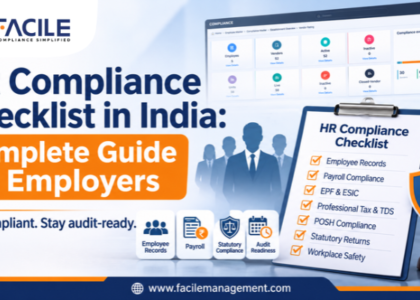


Managing Human Resources and payroll involves more than recruiting employees, maintaining attendance, and processing monthly salaries. Every organisation must also follow applicable government regulations, labour laws, employment rules, and statutory requirements to ensure smooth and legally compliant business operations.
Statutory Compliance in HR & Payroll is an essential responsibility for businesses of all sizes. It covers employee-related legal obligations, salary processing, statutory deductions, social security contributions, employment documentation, tax payments, and regulatory filings.
In India, organisations must monitor various statutory requirements relating to EPF, ESIC, TDS, Professional Tax, Labour Welfare Fund, minimum wages, bonus, gratuity, working conditions, and employee benefits, depending on their applicability.
With the implementation of India’s four Labour Codes from 21 November 2025, businesses must also review their existing HR policies, payroll structures, employment records, and compliance procedures against the applicable new legal framework.
This article explains the meaning of statutory compliance in HR and payroll, its importance, major statutory requirements, common compliance challenges, and best practices for businesses in India.
Statutory Compliance in HR & Payroll refers to the process of ensuring that an organisation follows applicable government laws, labour regulations, employment requirements, and tax provisions while managing employees and processing their salaries.
It includes maintaining employee records, calculating wages, deducting applicable statutory contributions, depositing taxes and contributions, filing prescribed returns, maintaining statutory registers, and ensuring compliance with employment regulations.
The main objective is to protect employee rights, ensure statutory benefits, maintain transparent payroll operations, and reduce legal and financial risks for employers.
In India, HR and payroll statutory compliance may cover:
The applicability of these requirements depends on the establishment, employee eligibility, workforce strength, nature of employment, applicable state rules, and relevant statutory provisions.
Statutory compliance plays an important role in protecting employees and ensuring responsible business operations.
Following applicable labour laws, tax regulations, and employment requirements helps organisations fulfil their legal responsibilities.
Statutory compliance supports employees’ entitlement to applicable wages, social security benefits, leave, and other employment-related protections.
Non-compliance may result in financial penalties, interest, legal proceedings, and other consequences under applicable laws.
Proper compliance procedures help organisations calculate salaries, statutory deductions, employer contributions, and employee benefits accurately.
Timely salary payments, transparent payslips, and accurate statutory contributions help build employee trust and confidence.
Maintaining accurate employee records, payroll registers, statutory returns, payment challans, and supporting documents helps organisations prepare for compliance audits.
Standardised compliance procedures and automated systems help reduce repetitive manual work and improve administrative efficiency.
Following applicable employment and statutory requirements demonstrates organisational accountability and responsible workforce management.
Organisations must monitor several HR and payroll-related statutory requirements based on their applicability.
The Employees’ Provident Fund framework provides retirement-related social security benefits to eligible employees.
Important compliance activities include:
Employees’ State Insurance provides medical and social security benefits to eligible insured employees.
Important compliance activities include:
Employers must deduct applicable income tax from employee salaries according to the relevant income tax provisions.
Important activities include:
Professional Tax is levied by applicable state governments.
Employers must monitor state-specific requirements relating to:
Labour Welfare Fund requirements are governed by applicable state-specific legislation.
Depending on the state, employers may need to:
Employers must ensure that employees receive wages in accordance with the applicable minimum wage requirements.
Important compliance activities include:
Eligible employees must receive statutory bonus in accordance with applicable legal provisions.
Employers should monitor employee eligibility, applicable calculations, payment timelines, and required records.
Gratuity is an important statutory employment benefit governed by applicable social security provisions.
Employers should monitor eligibility, qualifying service, gratuity calculations, employee separation, and payment obligations.
Employers must follow applicable maternity-related employment protections and benefit requirements.
This includes eligibility verification, maternity leave, applicable payment obligations, and maintenance of relevant records.
Organisations must monitor applicable requirements concerning working hours, weekly rest, overtime, leave, holidays, attendance, and employment documentation.
India has consolidated 29 Central labour laws into four comprehensive Labour Codes.
The four Labour Codes came into effect on 21 November 2025.
This Code addresses important matters relating to wages and employment remuneration.
Key areas include:
This Code covers industrial relations and employment-related matters.
Key areas include:
This Code consolidates provisions concerning social security and employee welfare.
Key areas include:
This Code addresses occupational safety, health, and working conditions.
Key areas include:
Employers should review applicable Central and State rules, notifications, and transition provisions before implementing payroll and HR changes.
Organisations may face compliance gaps due to manual processes, outdated information, inadequate documentation, and insufficient regulatory monitoring.
Incorrect salary components and wage classifications may affect statutory calculations and employee benefits.
Missing applicable EPF, ESIC, TDS, Professional Tax, or LWF deadlines may result in penalties, interest, or other legal consequences.
Incorrectly identifying employees, workers, contractors, or other employment categories may result in incorrect statutory treatment.
Failure to maintain appointment letters, employee records, wage registers, payslips, challans, and statutory returns can create audit difficulties.
Professional Tax, Labour Welfare Fund, minimum wages, and other requirements may differ across states.
Organisations that do not regularly review amendments, notifications, and new rules may continue using outdated compliance practices.
Incorrect EPF, ESIC, TDS, and other applicable deductions can lead to payroll discrepancies and compliance risks.
Without periodic reviews, organisations may fail to identify missing records, incorrect calculations, and outstanding statutory obligations.
Managing multiple branches and employees through disconnected spreadsheets and manual reminders increases the risk of missed deadlines and errors.
Businesses can strengthen statutory compliance by adopting structured processes and the following best practices.
Maintain accurate employee information, appointment details, salary structures, bank information, statutory identifiers, and employment records.
Regularly review Central and State labour regulations, notifications, minimum wage revisions, and statutory amendments.
Maintain a compliance calendar to track applicable payment deadlines, contribution deposits, return filing dates, renewals, and other statutory activities.
Review salary components, wage calculations, deductions, employer contributions, and employee benefits before payroll finalisation.
Perform periodic reviews of payroll registers, statutory challans, employee records, returns, and supporting documents.
Use digital tools to centralise compliance information, monitor deadlines, organise documents, and track pending activities.
Provide regular training on applicable labour laws, payroll procedures, statutory calculations, and compliance updates.
Maintain location-wise compliance information to manage differences in state-specific requirements.
Use appropriate access controls, secure document management, and data protection practices for confidential employee and payroll information.
Evaluate the impact of the four Labour Codes on salary structures, wage definitions, employment policies, statutory benefits, and payroll systems.
HR and Payroll Compliance Software helps organisations manage employee information, statutory requirements, payroll records, and compliance activities through a centralised digital platform.
Important features include:
These features help businesses improve compliance visibility, reduce repetitive administration, and streamline HR and payroll operations.
Managing HR, payroll, labour law requirements, and statutory compliance across multiple locations requires continuous monitoring and accurate documentation.
FACILE Management Services provides digital compliance management solutions designed to simplify HR, payroll, labour law, and statutory compliance operations.
F.A.C.I.L.E stands for Fast Automated Compliance & Intelligent Legal Engine.
Through the FACILE Product Suite, organisations can improve their compliance administration through:
Monitor HR, payroll, and statutory compliance activities through a centralised dashboard.
Maintain employee salary details, payslips, EPF information, ESIC information, and relevant employee records.
Improve visibility into applicable statutory payroll obligations and compliance activities.
Track pending activities, important statutory deadlines, and documentation requirements through automated alerts.
Maintain employee-related and statutory compliance documents in a structured digital environment.
Monitor compliance activities across multiple branches, establishments, and business locations.
Support digital management and generation of applicable statutory registers.
Monitor compliance audit activities, observations, and corrective actions.
Generate compliance reports to improve management visibility and support audit preparation.
With digital compliance management and automated monitoring, FACILE helps organisations simplify their HR and payroll compliance administration.
Explore FACILE Management Services:
Statutory Compliance in HR & Payroll is an essential responsibility for every organisation employing workers in India. It ensures that businesses follow applicable employment laws, process salaries accurately, deposit statutory contributions, maintain employee records, and fulfil government-prescribed obligations.
With the implementation of the four Labour Codes, businesses must regularly review their HR policies, payroll structures, statutory calculations, and compliance procedures against applicable legal requirements.
Avoiding common compliance mistakes requires accurate employee documentation, updated legal information, regular payroll audits, and a structured compliance calendar.
Implementing digital HR and payroll compliance software can help organisations reduce manual administration, improve compliance monitoring, and strengthen workforce management.
Simplify HR & Payroll Compliance with Smart Automation – FACILE Management Services.
Website: https://www.facilemanagement.com/
Email: info@facilemanagement.com
Statutory Compliance in HR refers to following applicable labour laws, employment regulations, and government requirements relating to employee hiring, working conditions, wages, benefits, leave, and employment records.
Statutory Compliance in Payroll involves ensuring accurate salary processing, statutory deductions, employer contributions, tax payments, return filing, and maintenance of payroll records according to applicable laws.
It helps organisations fulfil legal obligations, protect employee rights, avoid penalties, maintain accurate payroll records, and improve employee satisfaction.
Major compliance areas include EPF, ESIC, TDS, Professional Tax, Labour Welfare Fund, minimum wages, bonus, gratuity, maternity benefits, working hours, and statutory registers, depending on applicability.
The four Labour Codes are the Code on Wages, 2019; Industrial Relations Code, 2020; Code on Social Security, 2020; and Occupational Safety, Health and Working Conditions Code, 2020.
The four Labour Codes came into effect on 21 November 2025, according to the Ministry of Labour and Employment.
HR is responsible for monitoring applicable employment requirements, maintaining employee documentation, implementing workplace policies, tracking leave and attendance, and coordinating statutory compliance activities.
Payroll teams manage salary calculations, statutory deductions, employer contributions, tax withholding, applicable payments, payroll records, and statutory filing activities.
Non-compliance may result in financial penalties, interest, legal proceedings, employee disputes, audit observations, and reputational risks, depending on the applicable law and violation.
A Statutory Compliance Calendar is a schedule used to monitor applicable statutory payment deadlines, return filing dates, licence renewals, contribution deposits, and other compliance activities.
It is a digital platform that helps organisations manage employee records, salary processing, statutory deductions, compliance deadlines, documentation, and reporting.
Businesses can improve compliance through regular legal updates, accurate employee records, payroll verification, statutory audits, compliance calendars, employee training, and digital automation.
FACILE supports digital compliance administration through centralised dashboards, employee profile management, payroll compliance monitoring, automated alerts, statutory register management, digital audits, and compliance reporting.
Yes. Certain requirements, including Professional Tax, Labour Welfare Fund, minimum wages, holidays, and other employment-related rules, vary depending on state legislation and applicable notifications.


Facile Management Services (OPC) Private Limited is committed to delivering seamlessly integrated HR and compliance solutions designed for the evolving