Managing corporate compliance across multiple departments, legal entities, locations, contractors and vendors can become complex when organisations depend on spreadsheets, emails and disconnected systems.
A Corporate Compliance System helps businesses centralise and manage statutory obligations, due dates, licences, payroll compliance, audits, documents, risks, corrective actions and management reporting through one digital platform.
For growing companies and multi-location organisations, a central compliance system can improve visibility, accountability and audit readiness while reducing manual effort.
What is a Corporate Compliance System?
A Corporate Compliance System is a digital platform used to manage, monitor and report compliance obligations across an organisation.
It can help businesses manage:
- Statutory compliance
- Labour-law compliance
- Payroll compliance
- Corporate compliance calendars
- Due-date tracking
- Task assignment
- Alerts and reminders
- Escalations
- Licences and registrations
- Statutory registers
- Statutory returns
- Contractor compliance
- Vendor compliance
- Compliance audits
- Risk monitoring
- Corrective actions
- Multi-state compliance
- Multi-location compliance
- Dashboards and reports
The objective is to provide one structured system for managing compliance across the enterprise.
Why Businesses Need a Corporate Compliance System
Manual compliance management can create issues such as:
- Missed statutory deadlines
- Expired licences
- Delayed returns
- Missing documents
- Unclear ownership
- Payroll compliance gaps
- Contractor non-compliance
- Vendor compliance issues
- Open audit observations
- Overdue corrective actions
- Poor management visibility
- Weak audit trails
A Corporate Compliance System helps businesses standardise these activities.
Key Features of a Corporate Compliance System
1. Centralized Compliance Management
The system should bring together compliance across:
- Legal entities
- States
- Locations
- Business units
- Departments
- Contractors
- Vendors
This creates one source of compliance information.
2. Compliance Applicability Mapping
The platform can help determine applicable obligations based on:
- State
- Location
- Establishment type
- Factory status
- Industry
- Employee strength
- Contractor workforce
- Business activity
This reduces unnecessary or missed compliance tasks.
3. Corporate Compliance Calendar
The system should maintain a central calendar covering:
- Statutory payments
- Returns
- Registers
- Licence renewals
- Audit activities
- Contractor submissions
- Vendor requirements
Each activity can include an owner, due date and status.
4. Automated Task Assignment
Compliance activities can be assigned to:
- HR
- Payroll
- Compliance
- Legal
- Finance
- Factory teams
- Contractors
- Vendors
This improves responsibility and accountability.
5. Alerts and Reminders
The system can generate reminders for:
- Upcoming compliance
- Pending tasks
- Licence renewals
- Statutory payments
- Return filing
- Missing documents
- Audit closure
6. Escalation Management
If a compliance task remains incomplete, it can be escalated to higher management.
A typical flow can be:
Task Owner → Manager → Compliance Head → Senior Management
7. Multi-State Compliance Management
Businesses operating across multiple States may need to manage:
- Minimum wages
- Professional Tax
- Labour Welfare Fund
- Shops and Establishments compliance
- State licences
- Registers
- Returns
- Holidays
- State notifications
8. Multi-Location Compliance Monitoring
The system should support compliance across:
- Branches
- Offices
- Factories
- Warehouses
- Project sites
- Business units
9. Payroll Compliance Management
The platform can help validate:
- Attendance
- Payroll
- Minimum wages
- EPF
- ESIC
- PT
- LWF
- Overtime
- Payslips
- Wage registers
- Bank payment proof
10. Minimum Wage Monitoring
The software can compare employee wages against applicable rates based on:
- State
- Zone
- Industry
- Skill category
- Designation
- Effective date
Any shortfall can be flagged for review.
11. EPF Compliance Monitoring
The system can help manage:
- UAN
- PF wages
- Employee contribution
- Employer contribution
- ECR
- Challan
- Payment proof
12. ESIC Compliance Monitoring
The platform can monitor:
- ESIC number
- Eligibility
- ESIC wages
- Employee contribution
- Employer contribution
- Challan
- Payment status
13. Licence and Registration Management
The system should track:
- Licence number
- Registration number
- Effective date
- Expiry date
- Renewal date
- Responsible owner
- Renewal status
- Supporting documents
14. Statutory Register Management
The platform can support:
- Employee register
- Attendance register
- Wage register
- Leave register
- Overtime register
- Deduction register
- Contractor register
15. Statutory Return Management
The system can track:
- Return type
- Compliance period
- Due date
- Filing date
- Filing status
- Acknowledgement
16. Contractor Compliance Management
The platform can monitor:
- Contractor onboarding
- Labour licences
- Employee records
- Attendance
- Payroll
- Minimum wages
- EPF
- ESIC
- Payslips
- Payment proof
- Registers
- Returns
17. Vendor Compliance Management
Vendor compliance can include:
- Vendor onboarding
- Document verification
- Licence tracking
- Contract monitoring
- Payroll compliance
- Audits
- Risk scoring
- Corrective actions
18. Compliance Document Management
A central repository can store:
- Registrations
- Licences
- Returns
- Challans
- Registers
- Payslips
- Contractor records
- Vendor documents
- Audit evidence
19. Compliance Workflow Management
Activities can move through a structured flow:
Task Creation → Assignment → Submission → Review → Approval → Closure
This improves process control.
20. Compliance Audit Management
The system can support audits across:
- Payroll
- Contractors
- Vendors
- Licences
- Registers
- Returns
- Factories
- Establishments
21. Audit Observation Management
When a compliance issue is identified, the system should record:
- Observation
- Location
- Compliance category
- Risk level
- Responsible person
- Due date
- Corrective action
- Closure status
22. Corrective Action Management
A structured workflow can be:
Observation → Action Assigned → Evidence Submitted → Verification → Closure
This ensures issues are properly resolved.
23. Corporate Compliance Risk Management
Risks can be classified as:
Risk can be based on:
- Missed due dates
- Licence expiry
- Payroll gaps
- Contractor issues
- Vendor issues
- Audit findings
- Overdue actions
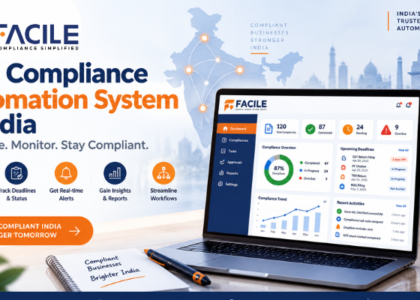
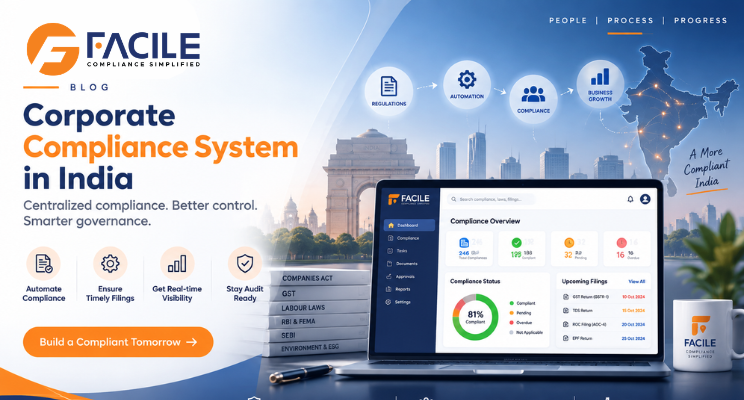
24. Corporate Compliance Dashboard
A central dashboard can show:
- Total compliances
- Completed activities
- Pending tasks
- Overdue items
- Expiring licences
- Payroll compliance
- Contractor compliance
- Vendor compliance
- Audit observations
- High-risk issues
- Corrective actions
- Compliance score
Corporate Compliance System Workflow
A typical end-to-end process can look like:
Applicability → Calendar → Task Assignment → Reminder → Submission → Review → Approval → Audit → Corrective Action → Closure
This creates a complete compliance lifecycle.
Benefits of a Corporate Compliance System
Centralized Visibility
Management can view compliance performance from one platform.
Reduced Manual Work
Teams spend less time maintaining spreadsheets and separate trackers.
Better Due-Date Control
Automated reminders help prevent missed deadlines.
Improved Accountability
Each task can have a clear owner and due date.
Better Audit Readiness
Documents, approvals and historical records remain organised.
Stronger Risk Management
High-risk issues can be identified and prioritised.
Better Contractor Governance
Contractor statutory and payroll compliance can be monitored centrally.
Better Vendor Oversight
Vendor documents, audits and corrective actions can be tracked consistently.
Multi-State Control
State-specific requirements can be monitored centrally.
Multi-Location Visibility
Management can compare compliance status across branches, factories and units.
Corporate Compliance System for Growing Businesses
As organisations expand, compliance can grow across:
Employees → Payroll → Locations → States → Contractors → Vendors → Laws → Audits → Risks
A Corporate Compliance System helps connect these areas into one structured governance framework.
Corporate Compliance System Checklist
Businesses should evaluate whether the system supports:
- Applicability mapping
- Compliance calendars
- Automated tasks
- Task ownership
- Due-date alerts
- Escalations
- Payroll compliance
- Minimum wages
- EPF
- ESIC
- PT
- LWF
- Licences
- Registers
- Returns
- Contractors
- Vendors
- Workflow management
- Audits
- Corrective actions
- Risk monitoring
- Dashboards
- Reports
- Audit trails
Who Can Use a Corporate Compliance System?
It is useful for:
- Large enterprises
- SMEs
- Manufacturing companies
- Factories
- IT companies
- Retail businesses
- Logistics companies
- Warehouses
- Construction companies
- Healthcare organisations
- Staffing companies
- Facility management businesses
- Multi-state organisations
- Multi-location businesses
- HR teams
- Payroll teams
- Compliance teams
- Legal teams
- Audit teams
- Procurement teams
- Contractor management teams
- Senior management
How FACILE ONE Helps With Corporate Compliance Management
FACILE ONE can help organisations centralise corporate compliance through one digital platform.
Businesses can use FACILE ONE to support:
- Statutory compliance
- Labour-law compliance
- Payroll compliance
- Compliance calendars
- Multi-state compliance
- Multi-location compliance
- Minimum wages
- EPF and ESIC
- PT and LWF
- Contractor compliance
- Vendor compliance
- Licence management
- Statutory registers
- Statutory returns
- Workflow management
- Compliance audits
- Corrective actions
- Risk monitoring
- Centralized dashboards
- Reports and audit trails
Why Choose FACILE ONE?
Corporate compliance requires coordination between HR, payroll, legal, compliance, contractors, vendors and management.
FACILE ONE helps bring these activities into one structured system.
Key capabilities include:
- Centralized compliance management
- Compliance calendars
- Due-date alerts
- Workflow automation
- Approval routing
- Escalation management
- Payroll and statutory validation
- Contractor and vendor compliance
- Licence tracking
- Audit workflows
- Corrective-action monitoring
- Risk management
- Management dashboards
How to Choose the Best Corporate Compliance System
Businesses should evaluate whether the platform provides:
- Centralized compliance control
- Applicability mapping
- Compliance calendars
- Automated task workflows
- Role-based ownership
- Alerts and reminders
- Escalations
- Multi-state capability
- Multi-location capability
- Payroll compliance
- Contractor monitoring
- Vendor monitoring
- Licence management
- Document management
- Audit workflows
- Risk scoring
- Corrective actions
- Dashboards
- Reports
- Audit trails
The right system should clearly answer:
What is applicable? What is due? What is overdue? Who owns the activity? Where is the risk? Has the issue been closed?
Conclusion
A Corporate Compliance System helps businesses replace fragmented manual tracking with a centralised and scalable compliance-management framework.
By connecting statutory obligations, payroll, licences, contractors, vendors, audits, risks and corrective actions, organisations can improve visibility and strengthen governance.
For businesses operating across multiple States and locations, FACILE ONE can help create a more efficient, transparent and audit-ready compliance environment.
Frequently Asked Questions – Corporate Compliance System
1. What is a Corporate Compliance System?
It is a digital platform used to manage and monitor statutory, payroll, licence, contractor, vendor, audit and risk-related compliance across an organisation.
2. Why do businesses need a Corporate Compliance System?
It helps centralise compliance activities, improve visibility and reduce manual tracking.
3. Can it manage compliance calendars?
Yes. Recurring statutory activities and due dates can be monitored centrally.
4. Can it send automated reminders?
Yes. Alerts can be generated for upcoming, pending and overdue activities.
5. Can overdue tasks be escalated?
Yes. Delayed activities can be escalated to managers and senior management.
6. Can it manage multi-state compliance?
Yes. State-specific minimum wages, PT, LWF, licences, registers and returns can be managed.
7. Can it support multiple business locations?
Yes. Offices, factories, warehouses, branches and project sites can be monitored.
8. Can it manage payroll compliance?
Yes. Attendance, minimum wages, EPF, ESIC, PT, LWF and related payroll records can be monitored.
9. Can it manage licences?
Yes. Licence validity, expiry dates, renewals, documents and ownership can be tracked.
10. Can it manage contractor compliance?
Yes. Contractor workers, licences, payroll and statutory records can be monitored.
11. Can it manage vendor compliance?
Yes. Vendor documents, audits, risk and corrective actions can be tracked.
12. Can compliance workflows be automated?
Yes. Tasks can move through assignment, submission, review, approval and closure.
13. Can it support compliance audits?
Yes. Audit checklists, observations and corrective actions can be managed digitally.
14. Can it monitor compliance risk?
Yes. Risks can be classified and tracked by severity and status.
15. Does it maintain audit trails?
Yes. Task activity, approvals, rejections, document submissions and closures can be recorded.
16. Can FACILE ONE support corporate compliance management?
Yes. FACILE ONE can support statutory compliance, payroll, licences, contractors, vendors, audits, risks and management dashboards.