

Understanding labour laws, statutory obligations and HR compliance terminology is essential for businesses operating in India. HR teams, payroll professionals, compliance managers, auditors and business owners regularly work with legal requirements, employee records, statutory payments and vendor documentation.
However, unfamiliar terms and abbreviations can make compliance management difficult, particularly for organizations operating across multiple states or working with several contractors and vendors.
A Compliance Glossary provides simple explanations of important terms used in labour law, payroll, statutory compliance and vendor audits. It helps professionals understand their responsibilities, communicate more effectively and organize compliance activities.
Facile Management supports businesses with compliance management, payroll-related services, vendor audits and digital compliance solutions. This glossary is designed to help professionals understand common compliance concepts and identify the areas they need to monitor.
A compliance glossary is a collection of important legal, regulatory, HR and business terms with clear definitions. It serves as a reference resource for professionals who need to understand compliance requirements and related processes.
A labour compliance glossary may include terms associated with employee benefits, statutory contributions, employment records, contractor management, licences, inspections and audits.
For example, understanding EPF, ESIC, minimum wages, statutory registers and vendor compliance helps organizations identify which records and processes require attention.
Labour laws and statutory procedures contain technical terms that may be unfamiliar to new HR professionals or business owners. A glossary explains these terms in accessible language.
Employees responsible for HR, payroll and legal compliance can use a glossary to understand common obligations and prepare for further research into applicable requirements.
Organizations engaging contractors and third-party service providers need to understand documentation, payroll validation, statutory contributions and audit observations. Clear terminology helps teams communicate requirements to vendors.
Payroll teams regularly work with wages, deductions, contributions, payslips and statutory payment records. A glossary helps clarify these concepts and their relationships.
Compliance management software can help organizations organize records, monitor due dates, maintain audit trails and identify gaps. Understanding the terminology makes it easier for users to follow these workflows.
Statutory compliance refers to meeting applicable legal and regulatory obligations. Depending on the establishment and workforce, these may involve registrations, licences, payroll requirements, statutory contributions, records and returns.
Labour law compliance involves following applicable employment and labour regulations concerning wages, working conditions, employee benefits, safety, working hours and other employment-related obligations.
Vendor compliance refers to verifying whether vendors and contractors meet relevant contractual, legal and statutory requirements. It may involve reviewing licences, employee records, wage payments and statutory contribution evidence.
A vendor audit is a structured assessment of a vendor’s compliance records, processes and performance against applicable requirements. It helps identify gaps, document observations and track corrective actions.
EPF is a retirement savings scheme for eligible employees covered under the applicable provident fund framework. Employers and employees contribute according to the relevant provisions and applicable rules.
ESIC administers the Employees’ State Insurance scheme, which provides specified social security benefits to eligible insured employees under the applicable framework.
Minimum wages are legally prescribed wage rates applicable to covered employment categories. Applicable rates may vary according to factors such as state, scheduled employment, skill classification and effective notification.
Professional Tax is a state-level tax imposed on specified professions, trades, callings and employments, subject to the applicable state’s legislation and rules.
The Labour Welfare Fund is a statutory welfare framework established under relevant state legislation. Contribution rules, applicability and payment schedules differ across states.
Contract labour refers to workers engaged through a contractor for work performed for an establishment. The applicable legal responsibilities depend on the relevant legislation, establishment and engagement arrangements.
Statutory registers are records that covered establishments must maintain under applicable laws and rules. Depending on the requirements, these may document attendance, wages, leave, employment details or other prescribed information.
Statutory returns are prescribed reports or declarations submitted to the relevant authority where required. They may contain information about employees, wages, contributions or other compliance-related activities.
A compliance calendar organizes recurring statutory obligations, filing deadlines, payment dates, licence renewals and other important compliance activities.
A compliance audit systematically reviews whether an organization is meeting applicable legal, regulatory and internal requirements. It helps identify deficiencies and establish corrective actions.
An audit observation records a gap, discrepancy or issue identified during an audit. It should include supporting evidence, the required corrective action, an owner and a target completion date where appropriate.
Corrective action refers to steps taken to address an identified compliance issue, correct an error or prevent recurrence. Evidence should be retained to demonstrate closure.
Payroll compliance involves processing salaries and related deductions, payments, records and statutory obligations accurately and within applicable deadlines.
Statutory deductions are amounts deducted from employee wages where authorized or required under applicable laws. The type and amount depend on the relevant legal provisions and employee circumstances.
Compliance risk is the possibility of legal, financial, operational or reputational consequences arising from failure to meet an applicable requirement.
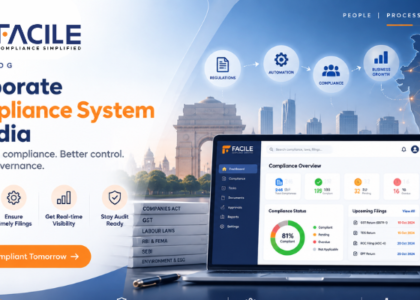
Compliance management software is a digital platform that helps organizations organize compliance requirements, maintain records, track deadlines, generate reports and monitor compliance status.
Managing compliance through disconnected spreadsheets, emails and physical files can make it difficult to identify missing documents or overdue activities.
A digital compliance platform can help organizations:
The exact capabilities depend on the software and its configuration. Organizations should confirm that their chosen platform supports their applicable laws, locations and business requirements.
Facile Management offers compliance-related services and technology-supported workflows for organizations that need structured oversight of statutory activities and vendor compliance.
Its service areas include labour law compliance, establishment compliance, payroll services, vendor audits and compliance tools. These offerings can help businesses organize compliance information, monitor outstanding tasks and improve audit preparation.
Organizations should evaluate their specific requirements, workforce structure, locations and statutory obligations before selecting a compliance solution.
Learn more at Facile Management.
A well-structured compliance glossary makes labour law, HR and statutory terminology easier to understand. It provides a useful reference for HR professionals, payroll teams, auditors, business owners and vendor management teams.
By understanding terms such as EPF, ESIC, minimum wages, vendor audit, statutory returns and compliance risk, organizations can communicate more effectively and build more organized compliance processes.
Use this glossary as a starting point for learning. Always verify current legal requirements, applicable state rules, official notifications and professional guidance before making compliance decisions.
Explore Facile Management’s compliance solutions to learn more about vendor audits, payroll support and digital compliance management.
A Compliance Glossary is a reference guide that explains important terms related to labour laws, HR, payroll, statutory obligations, vendor audits and regulatory requirements.
A labour law glossary helps businesses understand compliance terminology, improve employee awareness and identify the statutory requirements relevant to their operations.
Common terms include EPF, ESIC, minimum wages, Professional Tax, Labour Welfare Fund, statutory registers, statutory returns, contract labour and vendor compliance.
Statutory compliance covers applicable legal obligations across different business functions. Labour law compliance specifically concerns employment and labour-related legal requirements.
A vendor audit is a structured review of a vendor’s documentation, employment practices, payroll records and applicable statutory compliance. It helps identify compliance gaps and track corrective actions.
Compliance management software is a digital solution that helps businesses organize compliance records, track deadlines, monitor statutory obligations and prepare reports.
Businesses can improve vendor compliance by verifying documents, reviewing payroll and statutory records, conducting periodic audits, monitoring risk indicators and following up on corrective actions.
A compliance calendar helps organizations plan and monitor filing deadlines, statutory payments, licence renewals, inspections and other recurring obligations.
An audit observation identifies a compliance gap or discrepancy. Corrective action describes the steps taken to resolve the issue and prevent it from recurring.
HR professionals, payroll teams, compliance officers, auditors, business owners, procurement teams and vendor management professionals can use a compliance glossary as a reference resource.
Facile Management provides compliance-related services and digital solutions covering areas such as labour law compliance, payroll, vendor audits and statutory compliance workflows.
Businesses should monitor recurring obligations according to their applicable deadlines and review changes whenever relevant laws, rules, notifications or business cir


Facile Management Services (OPC) Private Limited is committed to delivering seamlessly integrated HR and compliance solutions designed for the evolving