
Managing compliance manually can become challenging as an organization grows. HR and payroll teams may need to manage employee information, statutory deductions, compliance activities, reports, deadlines and supporting records across multiple spreadsheets and systems.
An automated compliance management system provides a centralized platform for organizing these activities, helping businesses monitor compliance requirements and reduce repetitive administrative work.
For payroll teams in India, automation can cover areas such as PF, ESI, TDS, Professional Tax, Labour Welfare Fund where applicable, compliance reports and payroll reconciliation. Modern payroll platforms use automation for calculations and report preparation, while organizations generally retain responsibility for reviewing and completing required government payments and filings.compliance management system
An automated compliance management system is software that helps businesses manage compliance activities through centralized data, automated workflows, alerts, validation, reporting and tracking.
A typical HR and payroll compliance workflow can be:
Employee Data → Payroll Processing → Statutory Calculations → Compliance Checks → Reconciliation → Reports → Review → Filing & Records
Instead of relying on multiple spreadsheets, HR and finance teams can monitor compliance activities from one system.
Manual compliance processes often require repeated data entry, calculations and report preparation.
Automation can handle many repetitive activities and allow HR teams to focus on review and exception management.
A centralized system can bring employee, payroll and compliance information together.
This can make it easier to find records and review compliance status.
A dashboard can help teams monitor:
Payroll and statutory data can be compared to identify inconsistencies before reports or filings are finalized.
A structured compliance system can maintain historical records, reports and activity logs that support internal reviews and audits.
The system can help manage applicable PF calculations, employee information, contribution records and compliance reports.
For eligible employees, payroll software can automate applicable ESI calculations and support related reporting workflows.
TDS calculation and reporting are important components of payroll compliance.
The Income Tax Department confirms that payroll and ERP systems need to reflect the new section numbering, terminology and reporting requirements under the Income Tax Act, 2025, applicable to relevant TDS events from April 1, 2026.
Professional Tax requirements can vary across states. A compliance system can help organizations maintain applicable state-specific configurations.
Automated reminders can help HR teams monitor upcoming compliance activities and deadlines.
The system can highlight records requiring attention, helping payroll teams investigate issues before completing the compliance cycle.
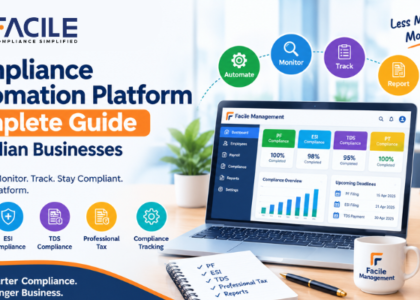
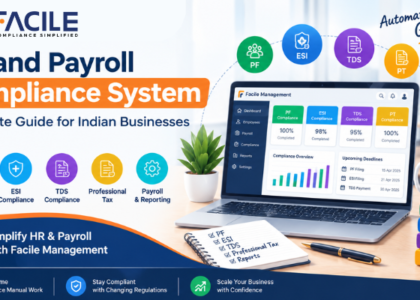
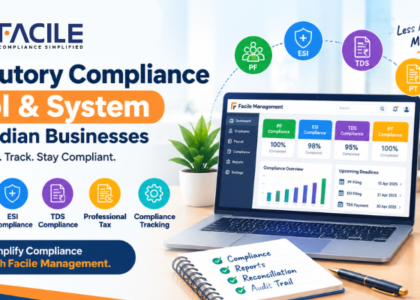
A dashboard provides a centralized view of compliance status across employees, establishments, vendors or business units.
Automated reports can help HR, payroll and management teams review compliance information.
An audit trail provides traceability of relevant activities and changes within the system.
A typical monthly process can follow these steps:
Employee master data, salary information and applicable statutory details are maintained in the system.
The system processes salary information based on configured payroll rules.
Applicable PF, ESI, TDS and Professional Tax calculations are processed.
The system checks configured compliance parameters and identifies exceptions.
Payroll data and statutory information are reviewed for discrepancies.
Required reports and compliance documents are generated.
HR or finance teams review the information and complete applicable payments or government filings.
Automation can prepare calculations and filing-related reports, but organizations should still review the results and complete required portal-based submissions.
| Manual Compliance | Automated Compliance System |
|---|---|
| Multiple spreadsheets | Centralized platform |
| Manual calculations | Automated calculations |
| Manual deadline tracking | Alerts and reminders |
| Scattered records | Centralized records |
| Manual reconciliation | Structured reconciliation |
| Difficult exception tracking | Exception dashboard |
| Manual reports | Automated reports |
| Limited visibility | Compliance dashboard |
| Time-consuming audits | Organized audit records |
An automated system can help businesses:
Payroll compliance systems need to keep pace with regulatory changes.
A current example is India’s transition to the Income Tax Act, 2025. The Income Tax Department states that salary paid on or after April 1, 2026 is governed by the new Act, and employers’ payroll systems need to reflect the new section numbering and related reporting requirements.
This illustrates why businesses should consider not only automation but also how their software vendor handles regulatory updates.
A compliance management platform can be useful for:
The exact compliance requirements will depend on the organization’s workforce, registrations, locations and applicable laws.
Before implementing a system, businesses should evaluate:
Check support for the statutory requirements applicable to your organization.
Look for automated calculations, workflows, alerts and reporting.
Ensure HR and management can easily understand compliance status.
Check whether payroll and compliance information can be reconciled efficiently.
Review the availability and format of statutory and management reports.
Check whether historical activities and changes are recorded.
Understand how the vendor handles changes in tax and statutory requirements.
The platform should support increasing employee numbers, locations and compliance complexity.
Payroll contains sensitive employee information, so appropriate access controls and security practices are important.
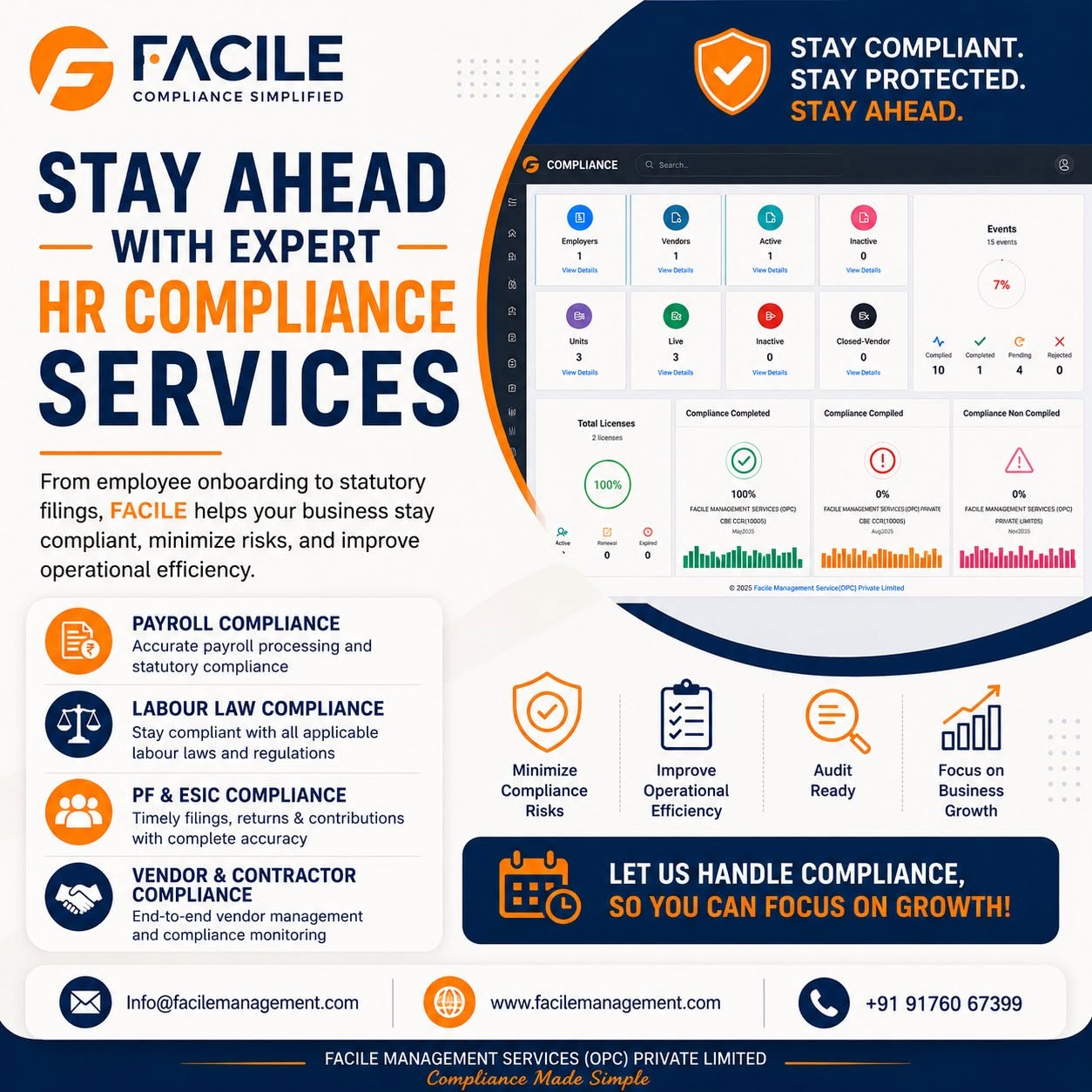
Facile Management provides HR and payroll technology designed to simplify compliance management.
The platform can help businesses manage and monitor:
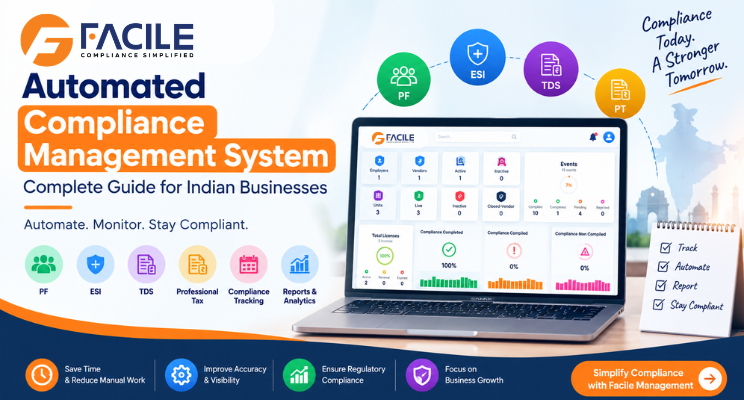
A centralized compliance dashboard can give HR and payroll teams better visibility into their compliance activities and help organize recurring compliance processes.
It is software that helps businesses manage compliance activities through automated workflows, calculations, alerts, validation, reporting and centralized records.
Depending on the platform, it can help manage statutory calculations, compliance events, deadlines, reports, exceptions, reconciliation and audit records.
Yes. Many payroll platforms automate calculations and compliance-related reports for areas such as PF, ESI, TDS and Professional Tax.
Yes, where supported, the system can manage applicable PF and ESI calculations, employee records and compliance reporting.
Yes. Payroll compliance systems can support salary TDS calculations and reporting. Businesses should ensure that their software reflects the current tax framework and applicable reporting requirements.
Yes, where supported. Since Professional Tax requirements can vary by state, businesses should verify that the software supports the states in which they operate.
No. Automation reduces repetitive work, but HR and finance teams should review payroll data, investigate exceptions and complete required payments and filings.
Yes. Centralized reports, historical records, reconciliation information and audit trails can help businesses organize information for internal and external reviews.
Yes. A centralized system can help smaller HR teams reduce spreadsheet dependency and establish a structured compliance process.
Facile Management combines HR, payroll and compliance capabilities to help businesses monitor statutory activities, manage compliance events, track exceptions, generate reports and maintain organized compliance records.


Facile Management Services (OPC) Private Limited is committed to delivering seamlessly integrated HR and compliance solutions designed for the evolving