
Managing payroll involves much more than calculating employee salaries. HR and finance teams also need to manage statutory deductions, employee records, payroll reports, compliance activities and important deadlines.
As businesses grow, managing these activities through spreadsheets and disconnected systems can become increasingly difficult.
An HR and payroll compliance system brings payroll processing and compliance management into a structured digital workflow, helping businesses manage applicable statutory requirements while improving visibility and reducing repetitive manual work.
Modern payroll systems commonly support statutory areas such as EPF, ESI, Professional Tax, LWF and TDS, along with compliance reports and automated workflows.
An HR and payroll compliance system is software that combines employee information, payroll processing and statutory compliance management in a centralized platform.
Depending on the organization’s requirements, the system can help manage:
The objective is to create a connected workflow rather than managing every compliance activity separately.
A typical workflow can look like this:
Employee Data → Attendance & Inputs → Payroll Processing → Statutory Calculations → Compliance Validation → Reconciliation → Reports → Review & Filing
This allows HR and payroll teams to manage compliance as part of the payroll process rather than treating it as a separate monthly activity.
Automation can handle many repetitive calculations and report-generation activities, while human review remains important for approvals, reconciliation and actual filing/payment activities.
Manual payroll processing often involves repeated calculations, spreadsheet updates and cross-checking.
A centralized system can automate routine processes and reduce repetitive data entry.
Using standardized payroll rules and employee information can help reduce calculation inconsistencies.
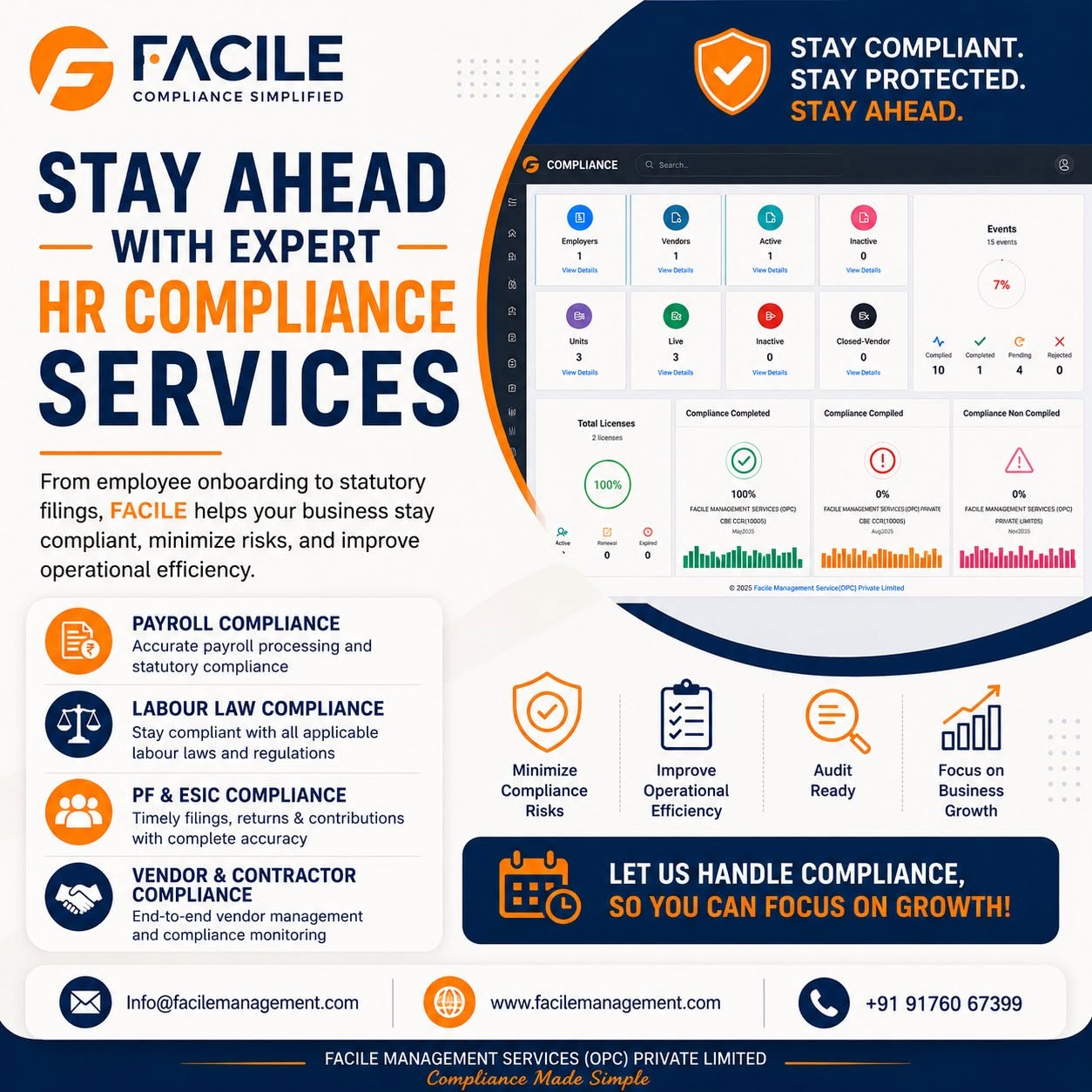
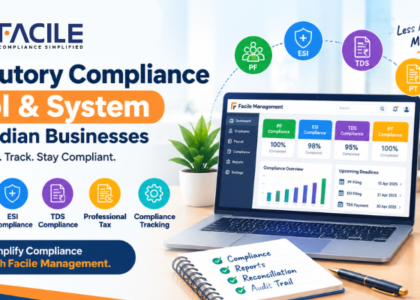
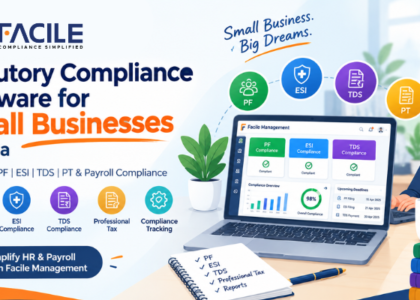
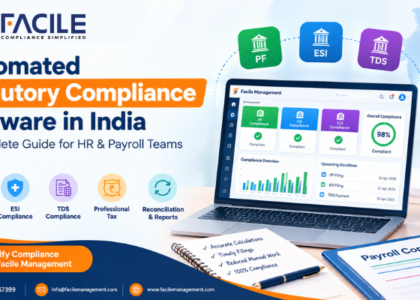
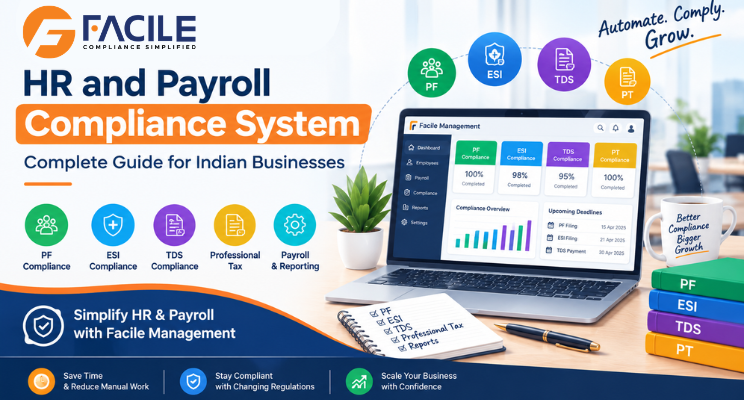
A compliance dashboard can give HR teams visibility into completed, pending and upcoming activities.
Automated statutory reports can reduce the time required to prepare payroll compliance information.
Centralized payroll and compliance records make it easier to retrieve historical information for internal reviews and audits.
Payroll systems need to keep pace with regulatory changes. For example, the Income Tax Department states that payroll and ERP systems must be updated for new section numbering, terminology and reporting requirements under the Income Tax Act, 2025 from April 1, 2026.
Manage applicable employee and employer PF information, contribution calculations, reports and compliance tracking.
Support applicable ESI calculations and employee-level compliance information.
Manage salary TDS calculations and related reports while supporting applicable tax rules and reporting requirements.
Manage state-specific Professional Tax configurations where applicable.
A centralized dashboard can show compliance status across employees, units, establishments or business locations.
Automated reminders can help HR teams monitor upcoming activities and deadlines.
Compare payroll and statutory data to identify discrepancies before finalizing reports.
Identify payroll or compliance records that require review or correction.
Generate structured reports for payroll reviews, compliance activities and audits.
Maintain historical records of relevant actions and changes for better traceability.
One of the key benefits of an integrated HR and payroll compliance system is connecting employee information with payroll.
For example:
Employee Master
↓
Attendance & Leave
↓
Salary Structure
↓
Payroll Processing
↓
PF / ESI / TDS / PT
↓
Compliance Validation
↓
Reports & Reconciliation
This reduces the need to transfer information manually between multiple spreadsheets or applications.
| Manual Process | Automated Compliance System |
|---|---|
| Multiple spreadsheets | Centralized database |
| Manual calculations | Automated calculations |
| Manual deadline tracking | Alerts and reminders |
| Separate compliance records | Centralized compliance history |
| Manual reconciliation | Structured reconciliation |
| Difficult exception tracking | Exception dashboard |
| Manual report preparation | Automated reports |
| Limited visibility | Compliance dashboard |
An HR and payroll compliance system can help businesses:
Payroll software is increasingly designed to combine statutory calculations, reports and payroll workflows rather than treating compliance as an isolated process.
Before selecting a system, businesses should evaluate:
Check whether the software supports the statutory components applicable to your organization.
Look for automated calculations, alerts, reports and compliance workflows.
Check whether the system provides the reports required by your HR, finance and audit teams.
The system should make it easy to identify differences between payroll and statutory data.
Consider whether the platform can support additional employees, locations and business units.
Payroll contains sensitive employee information, so access controls and appropriate security measures are important.
Ask how the software vendor handles changes to tax and statutory requirements.
As an organization grows, payroll becomes more complex.
A company may move from:
10 Employees → 50 Employees → 200 Employees → Multiple Locations
At each stage, employee records, payroll structures, statutory requirements and reporting needs can increase.
A centralized HR and payroll compliance system can provide a common workflow that grows with the organization.
Facile Management provides HR and payroll technology focused on simplifying payroll and statutory compliance processes.
The platform can help businesses manage:
With a centralized compliance dashboard, HR and payroll teams can gain better visibility into their compliance activities and manage payroll processes in a more organized way.
It is a software system that combines HR/payroll processes with statutory compliance management, including applicable deductions, compliance tracking, reports and records.
Depending on the software and applicable regulations, these can include PF, ESI, TDS, Professional Tax and Labour Welfare Fund.
Many repetitive activities such as calculations, deductions, report preparation and compliance tracking can be automated. Human review and appropriate filing/payment actions may still be required.
Yes, payroll compliance platforms can support applicable PF and ESI calculations, employee information and statutory reports.
Yes. Payroll software can calculate salary TDS and generate relevant reports. Businesses should ensure their system reflects current tax legislation and reporting requirements.
Yes, where supported. Professional Tax requirements can vary by state, so the software should support the applicable state-specific configuration.
Yes. Compliance reports, reconciliation records, historical data and audit trails can help HR and finance teams prepare information for internal or external reviews.
Yes. Small businesses can use centralized payroll software to reduce spreadsheet dependency and organize payroll and statutory compliance activities.
Many payroll systems support multiple locations and state-specific configurations. Businesses should verify the exact coverage and configuration capabilities of the software they select.
Facile Management combines HR, payroll and compliance capabilities to help businesses manage employee payroll, statutory compliance, reporting, reconciliation and compliance tracking through a centralized system.


Facile Management Services (OPC) Private Limited is committed to delivering seamlessly integrated HR and compliance solutions designed for the evolving