
Managing statutory compliance is an important part of running payroll in India. HR and payroll teams need to maintain employee information, process applicable deductions, monitor compliance activities, prepare reports and keep track of important obligations.
When these activities are managed through spreadsheets and disconnected processes, it can become difficult to maintain visibility and consistency.
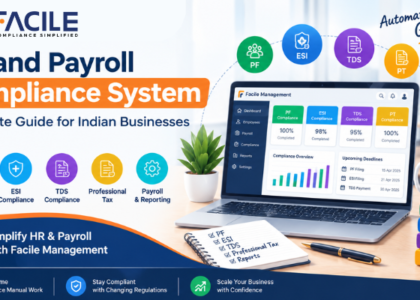
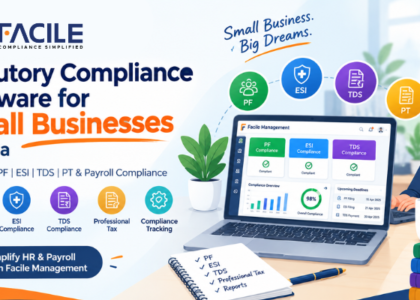
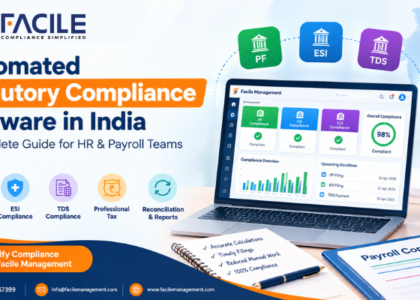
A statutory compliance tool provides a centralized way to manage payroll-related compliance activities, while a statutory compliance system can connect employee data, payroll processing, compliance monitoring, reporting and audit records in one platform.
Modern payroll compliance platforms commonly support areas such as PF, ESI, Professional Tax and TDS, along with reports and compliance tracking.
A statutory compliance tool is software designed to help organizations manage applicable statutory requirements through automation, monitoring, reporting and record management.
For payroll teams, this can include:
The exact statutory obligations depend on the organization’s employees, locations, registrations and applicable laws.
A statutory compliance system goes beyond individual calculations.
It can provide a centralized workflow such as:
Employee Data → Payroll → Statutory Calculation → Compliance Validation → Reports → Review → Filing/Tracking → Audit Records
This gives HR and finance teams a single place to monitor the status of their compliance activities.
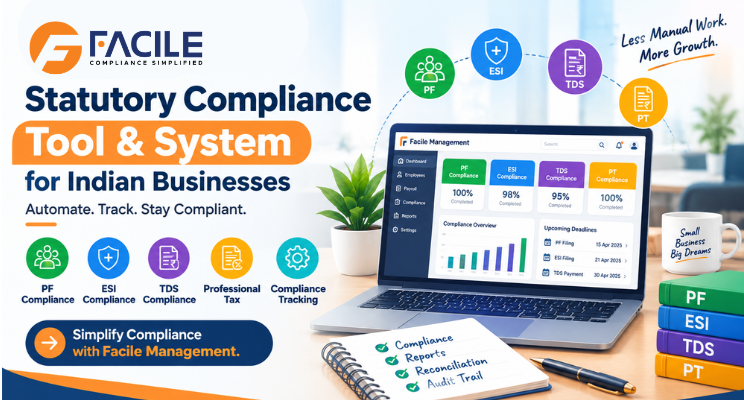
Instead of maintaining separate spreadsheets and documents, HR teams can manage compliance information from a centralized dashboard.
Automated payroll systems can calculate applicable statutory deductions based on configured employee and payroll information.
A compliance dashboard can show activities that are:
A compliance system can help HR teams compare payroll data with statutory information and identify discrepancies before reports are finalized.
Centralized records make it easier to retrieve historical payroll and compliance information during internal reviews or audits.
A payroll compliance system can help manage PF-related employee information, calculations, reports and compliance tracking.
For applicable employees, software can help manage ESI-related payroll calculations and reporting workflows.
TDS is an important component of salary processing. The Income Tax Department states that payroll and ERP systems need to be updated for the new section numbering, terminology and reporting requirements under the Income Tax Act, 2025, applicable to relevant events from April 1, 2026.
Professional Tax requirements can vary by state. A compliance system can help configure and track applicable state-specific payroll deductions.
Automated alerts can help HR teams monitor upcoming compliance activities and deadlines.
A centralized dashboard provides visibility into compliance status across employees, establishments, vendors or business units.
The system can highlight missing information, inconsistencies or compliance items requiring review.
Automated reports help HR and management review compliance performance and payroll data.
An audit trail can provide a history of relevant activities and changes within the system.
| Manual Process | Statutory Compliance System |
|---|---|
| Multiple spreadsheets | Centralized platform |
| Manual calculations | Automated calculations |
| Manual deadline monitoring | Alerts and reminders |
| Difficult exception tracking | Exception dashboard |
| Scattered records | Centralized records |
| Manual report preparation | Automated reports |
| Time-consuming reconciliation | Structured reconciliation |
| Limited visibility | Real-time compliance status |
A well-configured compliance platform can help organizations:
Automation does not remove the need for human review. Businesses still need to verify payroll data, determine which requirements apply to them and complete required government filings or payments. Payroll software can prepare calculations and reports while organizations retain responsibility for review and submission.
A statutory compliance system can be useful for:
For growing organizations, a centralized system can also provide a scalable foundation for managing additional employees and locations.
Before selecting a solution, businesses should evaluate:
Facile Management provides HR and payroll technology designed to simplify statutory compliance management.
The platform can help HR and payroll teams manage and monitor:
With a centralized compliance dashboard, businesses can gain better visibility into their payroll compliance activities and organize their statutory processes more efficiently.
A statutory compliance tool is software that helps businesses manage applicable statutory requirements through payroll automation, compliance tracking, reports, alerts and centralized records.
A compliance tool may focus on specific activities such as calculations or reporting. A compliance system typically provides a broader workflow covering data, payroll, compliance monitoring, reporting, tracking and audit records.
Depending on the software, it can support PF and ESI calculations, employee records, reports and compliance tracking.
Yes. Payroll compliance software can support salary TDS calculations and related reports. Organizations should ensure their payroll system is updated for applicable 2026 requirements under the Income Tax Act, 2025.
Yes, where supported. Professional Tax can be configured according to applicable state requirements.
This depends on the platform. Some systems prepare filing-ready reports or files, while the actual submission and payment may still require action through the relevant government portal.
Yes. A centralized system can reduce spreadsheet dependency and help smaller HR teams organize payroll compliance activities.
Yes. Compliance reports, historical records, reconciliation information and audit trails can help businesses organize information required for internal reviews and audits.
Many payroll compliance platforms support multiple establishments or locations, with applicable state-specific configurations. Businesses should verify this capability before implementation.
Facile Management combines HR and payroll technology with compliance management features, helping organizations monitor statutory activities, reports, exceptions and payroll compliance from a centralized platform.


Facile Management Services (OPC) Private Limited is committed to delivering seamlessly integrated HR and compliance solutions designed for the evolving