
Managing compliance risk requires more than completing statutory tasks. Organisations also need to identify compliance gaps, assess risk, conduct audits, assign observations, track corrective actions, monitor due dates, maintain evidence and ensure that issues are actually closed.
A Compliance Risk Audit Management Application helps businesses manage this entire process through a centralised digital platform. It can bring together compliance audits, risk assessments, observations, corrective actions, documents, dashboards and multi-location monitoring into one structured system.
For organisations operating across multiple establishments, factories, contractors or States, such an application can improve compliance visibility and help management focus on high-risk areas before they become regulatory or operational problems.
A Compliance Risk Audit Management Application is software designed to help businesses identify, evaluate, monitor and close compliance risks through structured audit workflows.
It can help manage:
The objective is to create a clear and auditable process from risk identification to final closure.
Compliance risks can arise from many areas, including payroll, labour laws, licences, statutory registers, contractor records, workplace safety and overdue obligations.
Manual audit tracking often depends on:
This can create problems such as:
A Compliance Risk Audit Management Application helps centralise these activities.
The application should help organisations identify risks across areas such as:
Each identified risk should be linked to the relevant business location, department or compliance requirement.
A structured risk assessment helps businesses understand which issues require immediate attention.
The system should allow risks to be classified based on factors such as:
This helps management prioritise corrective actions.
The application should support configurable risk levels such as:
Risk levels can be used for:
The system should help compliance teams plan audits by:
Audit plans should clearly show scheduled, completed and pending audits.
A strong application should provide structured audit checklists.
Audit checklists may include:
Checklists help ensure audits are performed consistently.
When an audit issue is found, the application should create a structured observation.
An observation can contain:
This creates a complete record of the compliance gap.
Every audit observation should have a clear corrective action.
The application should support:
This ensures observations are not only recorded but actually resolved.
A good audit management system should also help organisations prevent repeated issues.
Preventive actions can include:
This helps reduce recurrence.
Each observation and corrective action should have a due date.
The system should show:
This gives compliance teams better control over closure timelines.
The application should send reminders when:
Escalations can be sent to managers based on risk level or delay.
Audit observations should be supported by evidence.
The system should allow documents such as:
to be stored against the relevant audit record.
For major or recurring compliance issues, the system should support root-cause analysis.
Common root causes may include:
This helps organisations move beyond temporary fixes.
A Compliance Risk Audit Management Application can calculate a compliance score based on:
This gives management a quick view of compliance health.
A risk dashboard should provide visibility over:
This helps management identify priority areas immediately.
Large organisations may need to conduct audits across:
A central application can organise audits as:
Organisation → Location → Audit → Risk → Observation → Corrective Action → Verification → Closure
The application should help audit vendors and contractors across areas such as:
Vendor risk can then be scored and monitored.
The system should support audits against statutory obligations such as:
This helps businesses maintain a consistent regulatory audit framework.
Every action in the system should ideally be traceable.
An audit trail can record:
This strengthens accountability.
Management can identify high-risk compliance issues quickly.
Observations can be assigned and tracked through closure.
Root-cause and preventive-action tracking help reduce recurring issues.
Each issue has an owner, due date and status.
Documents and evidence remain linked to audit records.
Dashboards provide clear risk and compliance information.
Audits across multiple establishments and vendors can be monitored centrally.
A structured workflow can follow:
Identify Risk → Plan Audit → Conduct Audit → Raise Observation → Assign Risk Level → Define Corrective Action → Upload Evidence → Verify → Close
This creates a consistent process across the organisation.
Businesses should regularly verify:
It is useful for:
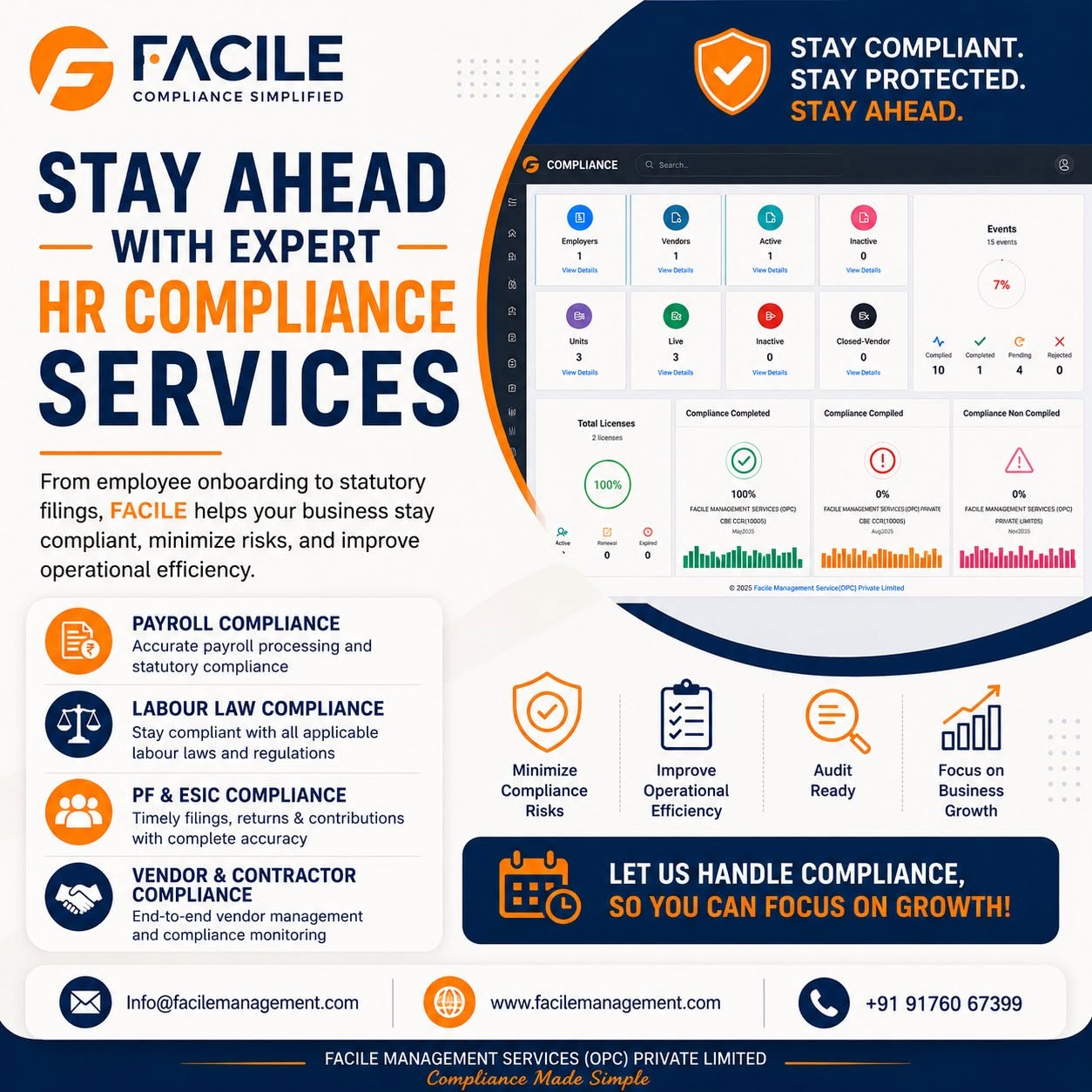
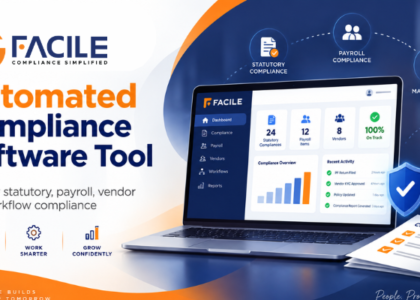
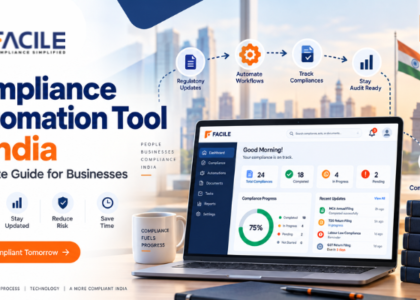
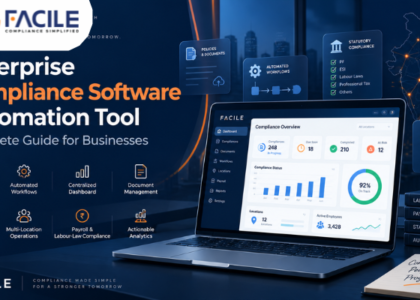
FACILE ONE can help organisations manage compliance risks and audits through a centralised digital framework.
Businesses can use FACILE ONE to support:
Compliance risk management requires coordination between auditors, compliance teams, HR, vendors, factories and management.
FACILE ONE provides a structured platform that helps organisations move from manual tracking to a clear digital workflow.
Key capabilities include:
Businesses should evaluate whether the application supports:
The best application should clearly answer:
Where is the compliance risk? How serious is it? Who owns the corrective action? When is it due? Is evidence available? Has the issue been verified and closed?
A Compliance Risk Audit Management Application helps businesses identify compliance risks, conduct structured audits, assign observations, monitor corrective actions and maintain clear evidence until final closure.
For organisations operating across multiple establishments, factories, vendors and locations, FACILE ONE can help centralise audit management and improve risk visibility, accountability and compliance governance.
It is software used to identify compliance risks, conduct audits, record observations, assign corrective actions and monitor closure.
It helps businesses detect statutory and operational compliance gaps before they lead to penalties, disputes or regulatory action.
Yes. Risks and observations can be classified as low, medium, high or critical based on configured criteria.
Yes. Standardised checklists can be created for different compliance areas, locations and vendors.
Yes. Each observation can include risk level, owner, due date, evidence and closure status.
Yes. Corrective actions can be assigned to responsible persons and monitored until closure.
Yes. Due dates, overdue status and escalation workflows can be monitored.
Yes. Root causes can be recorded for major or recurring compliance findings.
Yes. Preventive measures can be assigned and monitored to reduce recurrence.
Yes. Compliance scores can be calculated based on audit performance, observations and risk severity.
Yes. Vendor payroll, statutory, licence and document compliance can be audited.
Yes. Contractor compliance risks and corrective actions can be monitored.
Yes. Audits can be managed across factories, branches, warehouses, offices and project sites.
Yes. Evidence such as challans, registers, licences, returns and closure documents can be linked to audit records.
Yes. Dashboards can show critical risks, open observations, overdue actions, audit status and compliance scores.
Yes. FACILE ONE can support audit planning, observations, risk classification, corrective actions, evidence, dashboards and multi-location audit monitoring.


Facile Management Services (OPC) Private Limited is committed to delivering seamlessly integrated HR and compliance solutions designed for the evolving