
Labour law compliance is an essential responsibility for every manufacturing organization. Managing employee records, payroll, contractor documentation, factory licences, statutory registers and regulatory deadlines can become complicated when operations involve multiple departments, shifts and locations.
Manual compliance processes often rely on spreadsheets, emails, paper records and repeated follow-ups. These methods can make it difficult to track deadlines, identify missing documents and prepare for audits efficiently.
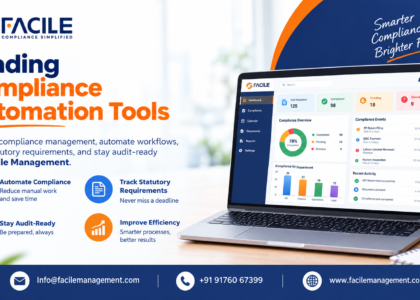
Labour law compliance automation in manufacturing helps businesses organize statutory obligations, maintain digital records, monitor deadlines and improve compliance visibility through a centralized system.
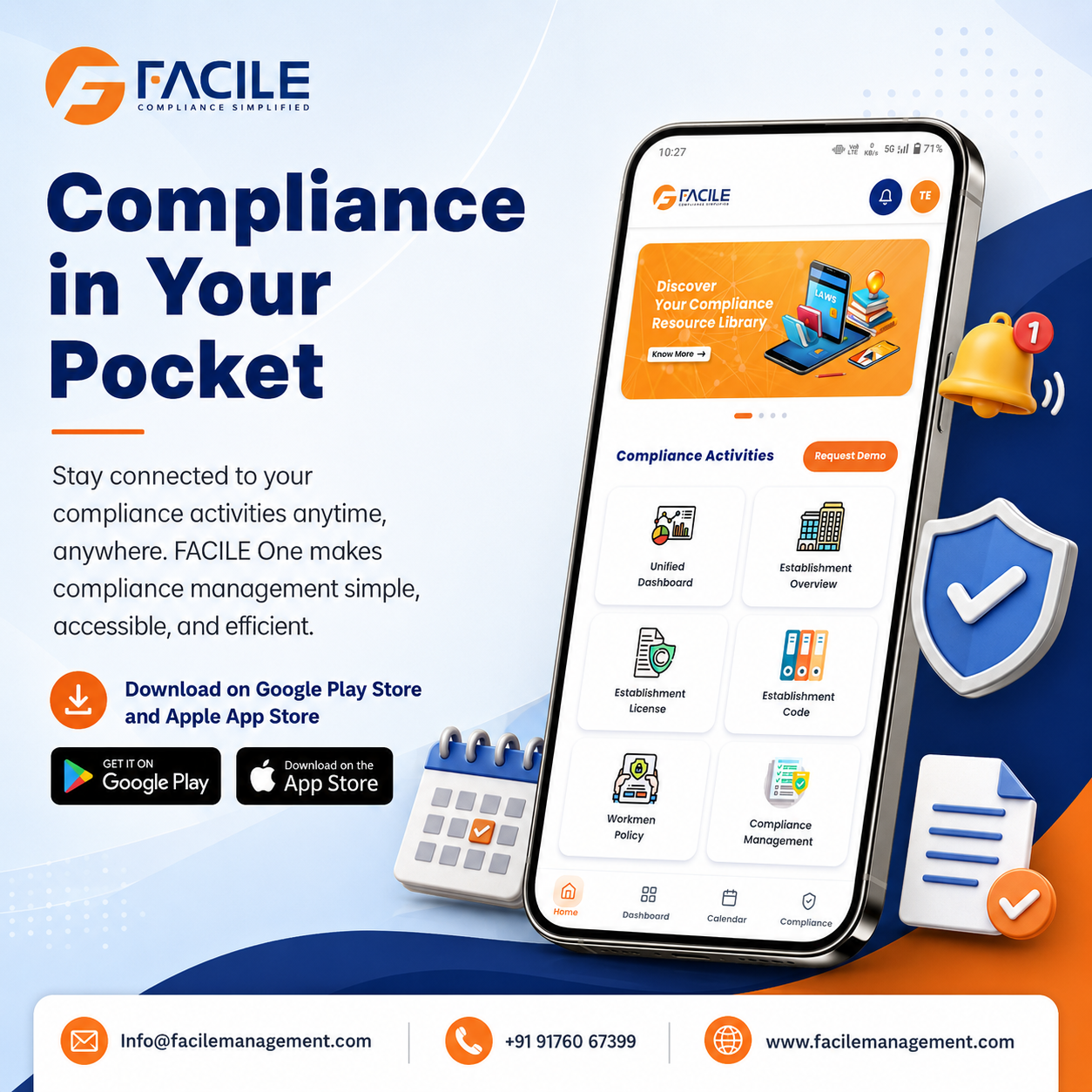
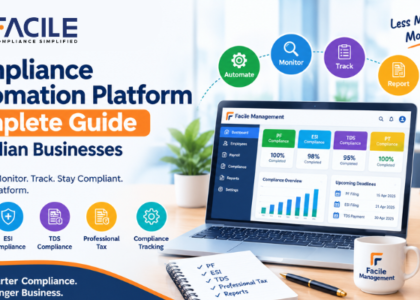
With digital compliance management solutions from Facile Management, manufacturing businesses can streamline compliance workflows, monitor contractor documentation, manage licence renewals and maintain organized audit records.
Labour law compliance automation involves using digital software to manage and monitor statutory responsibilities related to employees, payroll, contractors, factory operations and workplace safety.
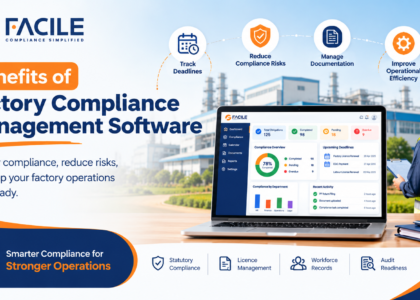
A suitable compliance management system can help organizations:
India’s four Labour Codes were announced as effective from 21 November 2025. Manufacturing organizations should review the applicable provisions, rules, notifications and state-level requirements when building or updating their compliance processes.
Press Information Bureau
+1
Manufacturing companies often manage a combination of permanent employees, contract workers, shift-based operations and third-party service providers. This creates several interconnected compliance responsibilities.
Common challenges include:
Automating these workflows helps centralize information, establish task ownership and identify outstanding actions before they become larger operational problems.
Automate payroll data validation, applicable EPF and ESI checks, professional tax validation where applicable, and reconciliation of wages and statutory contributions. Maintain records of exceptions, corrections and approvals.
Use digital workflows to collect contractor licences, workforce details, wage records and statutory payment evidence. Track missing documents, expired licences and pending corrective actions.
Organize applicable registers, returns and supporting records digitally. Where the software supports it, generate prescribed formats from validated data and track filing status.
Government platforms such as Shram Suvidha also provide online labour-law return facilities.
return.shramsuvidha.gov.in
+1
Maintain licence details, validity dates, renewal requirements and supporting documents in one repository. Configure reminders and escalation workflows for upcoming renewals.
Create digital checklists, track compliance exceptions, store supporting evidence and assign corrective actions to the relevant department or contractor.
Step 1: Identify applicable requirements. Map the statutory obligations for each factory, location and workforce category.
Step 2: Create a compliance calendar. Record filing dates, payment deadlines, inspections and licence renewals.
Step 3: Digitize compliance records. Organize employee records, contractor documents, registers, returns and licences in a secure repository.
Step 4: Integrate payroll and attendance. Where possible, connect workforce data with payroll and compliance workflows to reduce duplicate entry.
Step 5: Monitor contractor submissions. Establish submission schedules and review evidence before marking tasks complete.
Step 6: Configure alerts. Assign responsibilities and enable reminders for upcoming deadlines, missing records and overdue actions.
Step 7: Review dashboards and reports. Monitor compliance status, investigate exceptions and document corrective actions.
| Benefit | Business value |
|---|---|
| Centralized records | Easier access to compliance information |
| Automated reminders | Better deadline monitoring |
| Data validation | Earlier identification of discrepancies |
| Contractor monitoring | Improved document visibility |
| Digital audit trails | Easier preparation for internal reviews |
| Central dashboards | Better oversight across locations |
| Standardized workflows | More consistent compliance administration |
Facile Management offers digital compliance management solutions that can help manufacturing businesses organize monthly compliance activities, contractor documentation, licence tracking, statutory records and audit workflows.
By bringing these activities into a structured digital process, businesses can improve visibility, reduce repetitive administration and strengthen their compliance monitoring practices.
Simplify labour law compliance with Facile Management.
Contact the team to discuss your manufacturing compliance requirements and suitable automation workflows.
It is the use of digital software to organize statutory obligations, track deadlines, manage contractor records, monitor licences and maintain compliance reports for manufacturing establishments.
Choose a system that supports your applicable statutory requirements, contractor management, payroll validation, licence tracking, document storage, alerts, audit trails and multi-location reporting.
Companies can automate reminders, document collection, licence tracking, payroll validations, register preparation, return workflows, contractor monitoring and compliance reporting, depending on the software’s capabilities.
It organizes records and supporting evidence, tracks pending issues and helps teams retrieve historical documentation more efficiently.
Many platforms offer centralized dashboards and location-wise workflows. Verify the software’s support for state-specific requirements, establishment structures and user permissions.
Yes. Digital workflows can help collect contractor documents, monitor licence validity, review wage and statutory payment evidence, and track missing submissions.
No. Software supports monitoring and documentation, but businesses must ensure accurate data, appropriate legal interpretation, human review and timely completion of statutory obligations.
Facile Management offers solutions for compliance monitoring, vendor audits, licence management and statutory compliance workflows. Businesses can contact the team to discuss their requirements.


Facile Management Services (OPC) Private Limited is committed to delivering seamlessly integrated HR and compliance solutions designed for the evolving