
Managing compliance is an essential responsibility for businesses in India. Employers must understand applicable labour laws, maintain statutory records, monitor filing deadlines and ensure that relevant employment and vendor-related obligations are addressed.
For HR professionals, payroll teams, compliance managers and business owners, keeping up with changing regulations can be challenging. Requirements may vary depending on the state, establishment type, workforce size and nature of business operations.
Compliance guides help simplify these responsibilities by providing practical information, checklists and step-by-step explanations of important compliance processes.
In this article, we explore the importance of compliance guides, the major areas businesses should monitor and how digital compliance management can support more organized operations.
Compliance guides are informational resources that explain legal, regulatory and internal compliance requirements in a structured and easy-to-understand format.
They help organizations identify applicable obligations, understand required documentation, plan recurring activities and establish processes for monitoring compliance.
Depending on the business, compliance guides may cover labour laws, payroll, employee benefits, contractor management, vendor audits, workplace safety, licences, statutory registers and regulatory filings.
A well-designed guide should explain what needs to be reviewed, which records may be required, who is responsible and where the latest official requirements can be verified.
Compliance requirements can involve multiple laws, notifications and procedural rules. Clear guides help professionals understand the subject before consulting the relevant legislation or seeking specialist advice.
Organizations often manage recurring payments, returns, renewals and record updates. A compliance checklist or calendar can help teams plan these activities and follow up on outstanding tasks.
Maintaining accurate records is important for internal reviews, audits and regulatory inspections. Compliance guides help teams identify the documents they may need to maintain under applicable requirements.
Businesses working with contractors and third-party service providers need processes for reviewing vendor documentation, employment records and applicable statutory compliance. Vendor compliance guides can help standardize these reviews.
Assigning owners, due dates and follow-up actions makes it easier to monitor compliance activities and identify unresolved issues.
A labour law compliance guide explains employment-related obligations, including wages, working conditions, social security, employee welfare and workplace safety.
Employers should identify the laws and rules applicable to their establishments and review relevant central and state requirements.
A statutory compliance guide helps businesses organize applicable legal obligations, including registrations, licences, statutory payments, records and returns.
The exact requirements depend on the organization’s industry, locations, workforce and legal structure.
A payroll compliance guide covers salary processing, wage calculations, authorized deductions, statutory contributions, payroll documentation and applicable payment timelines.
Accurate payroll records and regular reviews help organizations identify discrepancies and address issues promptly.
A vendor compliance guide helps businesses establish a consistent process for checking third-party service providers and contractors.
Typical review areas may include:
Requirements should be assessed according to the relevant law, contract and business circumstances.
A vendor audit guide explains how to plan and conduct compliance reviews, collect supporting evidence, record observations and monitor corrective actions.
A structured audit process improves visibility into vendor-related risks and supports consistent follow-up.
These guides help organizations review relevant workplace safety requirements, employment policies, employee documentation, training records and workplace grievance procedures.
Applicable obligations depend on the workplace, workforce and governing legislation.
A useful compliance guide should include the following elements.
Applicability: Identify the establishment types, employee categories, locations and conditions relevant to the requirement.
Required documentation: List the records, forms, evidence and supporting documents that may be necessary.
Due dates and frequency: Explain applicable submission, payment, renewal and review schedules.
Responsible teams: Assign ownership to the relevant HR, payroll, finance, legal or vendor management personnel.
Verification sources: Link to official government notifications, legislation and regulatory portals wherever possible.
Review and updates: Include a review date and a process for updating the guide when applicable requirements change.
Corrective actions: Explain how to document compliance gaps, assign responsibility and verify resolution.
Businesses can use the following steps to establish a more organized compliance process.
Managing compliance through separate spreadsheets, emails and physical files can make it difficult to track deadlines, maintain documentation and follow up on unresolved issues.
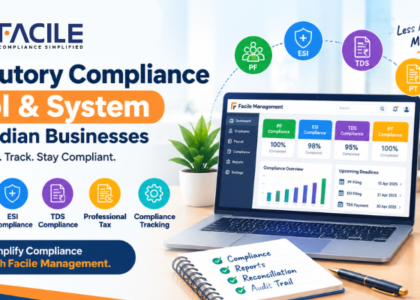
Compliance management software can help businesses centralize records, organize compliance activities, monitor deadlines and generate reports.
Depending on the platform, useful capabilities may include:
Software supports compliance administration, but it does not automatically guarantee legal compliance. Businesses must validate applicability, maintain accurate information and review relevant legal changes.
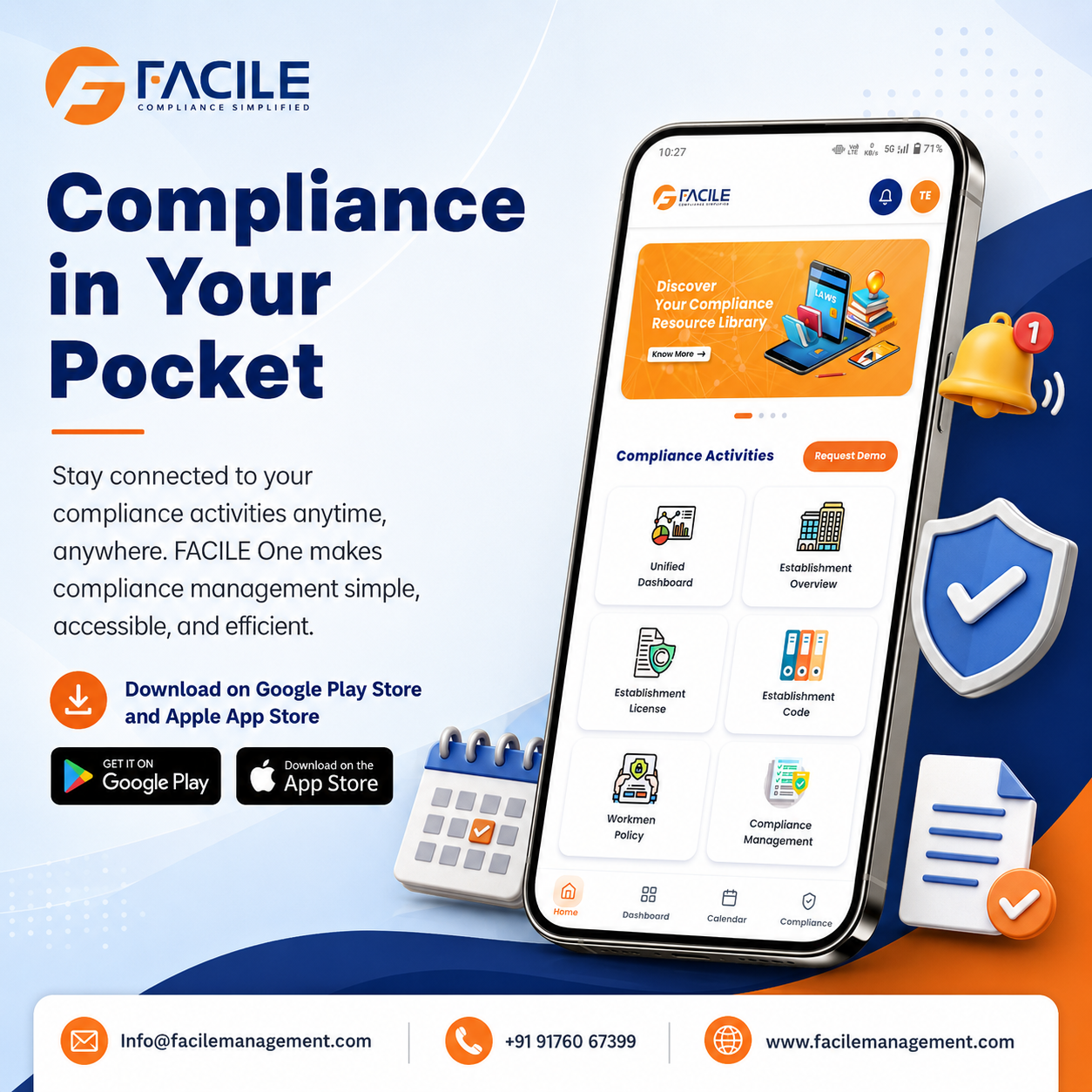
Facile Management offers compliance-related services and digital solutions designed to help businesses organize statutory activities, vendor audits and compliance workflows.
Organizations can explore its services to understand how structured compliance processes and technology-supported monitoring may help improve documentation, visibility and audit preparation.
To learn more, visit Facile Management.
Compliance guides help businesses understand their obligations, organize documentation, monitor deadlines and improve accountability. From labour law and payroll to vendor audits and statutory compliance, structured guidance can make recurring activities easier to manage.
By combining reliable reference materials, regular reviews, clear responsibilities and appropriate digital tools, organizations can develop a more consistent compliance management process.
Businesses should always verify current requirements against official notifications and applicable legislation before making compliance decisions.
Compliance guides are practical resources that explain legal and regulatory obligations, documentation requirements, deadlines and recommended processes for businesses.
They help businesses understand applicable regulations, organize statutory records, monitor deadlines and establish consistent compliance procedures.
Common types include labour law compliance guides, statutory compliance guides, payroll compliance guides, vendor compliance guides, vendor audit guides and workplace safety guides.
It should cover applicable employment laws, wage requirements, employee benefits, statutory records, registrations, filing obligations and relevant state-specific requirements.
A statutory compliance checklist is a structured list of applicable legal obligations, responsible teams, deadlines and supporting documents used to monitor compliance activities.
Businesses can improve vendor compliance by verifying applicable documents, reviewing statutory records, conducting periodic audits and tracking corrective actions.
It can help businesses organize records, schedule activities, monitor deadlines, track audit findings and generate compliance reports, depending on its features.
Compliance guides should be reviewed periodically and whenever relevant legislation, government notifications, state rules or business circumstances change.
HR managers, payroll professionals, compliance officers, auditors, finance teams, procurement teams, vendor managers and business owners can benefit from compliance guides.
Businesses should consult official government websites, relevant legislation, government notifications and qualified compliance professionals. Industry resources can provide useful explanations but should not replace authoritative legal sources.
Facile Management provides compliance-related services and digital solutions for areas such as statutory compliance, vendor audits and compliance workflow management.
No. Guides provide practical information, but compliance depends on the applicable law, the organization’s circumstances, the accuracy of its records and the proper implementation of required procedures.


Facile Management Services (OPC) Private Limited is committed to delivering seamlessly integrated HR and compliance solutions designed for the evolving