
Managing payroll involves more than calculating employee salaries. HR and payroll teams also need to monitor statutory deductions, employer contributions, employee records, compliance reports and filing-related activities.
For organizations in India, PF, ESI and TDS are important components of payroll compliance. EPFO provides employer-facing systems for EPF-related activities, while ESIC provides online employer services for registration, employee-related processes and contribution payments.
At the same time, India’s TDS framework has undergone an important legislative transition in 2026. The Income Tax Department states that salary TDS for payments from April 1, 2026 onward is governed by the Income Tax Act, 2025, including the new salary-TDS provisions under Section 392.
This makes having an organized and configurable payroll compliance process increasingly important.
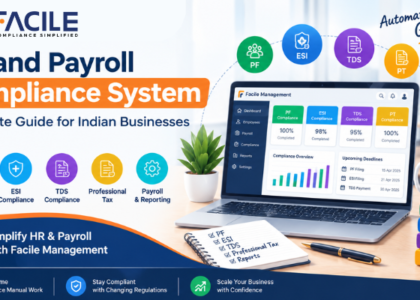
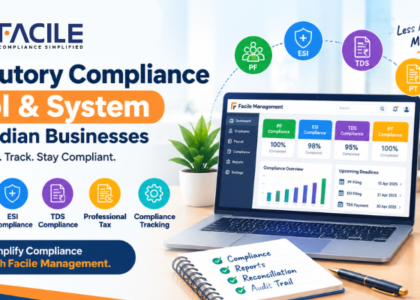
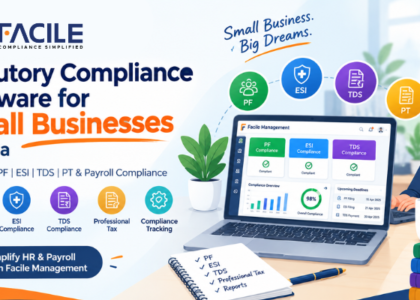
PF, ESI & TDS compliance software is a payroll technology solution that helps HR, payroll and finance teams monitor statutory payroll requirements through automated checks, alerts, reconciliation and reporting.
Instead of relying entirely on spreadsheets and manual verification, organizations can centralize compliance information and identify potential exceptions before they become larger payroll issues.
A comprehensive solution can help monitor:
Payroll compliance errors can occur because of incorrect employee data, salary changes, eligibility differences, calculation issues or missed compliance activities.
Automating compliance checks can help payroll teams establish a more consistent review process.
EPFO provides employer systems for EPF-related activities, including employer login and electronic processes. Its current employer portal also notes that the ECR format has been revised to a UAN-based format.
A payroll compliance tool can help organizations review PF-related payroll information and identify records requiring attention.
ESIC’s employer guidance covers employee registration and online contribution-related processes. ESIC states that monthly contributions are filed online and that contributions are payable within the prescribed period.
Software can help payroll teams track relevant employee records, contribution data and compliance activities.
Salary TDS requires accurate employee income and tax information. The Income Tax Department’s current guidance confirms that the legal framework changed from April 1, 2026, with salary TDS under the Income Tax Act, 2025.
For payroll teams, this makes maintaining appropriately updated payroll and tax configurations particularly important.
Monitor PF-related payroll calculations and employee records.
The software can flag potential inconsistencies for payroll teams to review.
Track ESI-related employee data and contribution information.
This can help teams identify records that require further verification before completing compliance activities.
Review salary, taxable income, deductions and TDS information.
A configurable system can also accommodate changes to applicable tax rules and payroll configurations.
Receive alerts for:
Compare payroll information across different records and systems.
For example:
Payroll → Statutory Data → Accounting → Payment Records
This can help identify mismatches before final reporting.
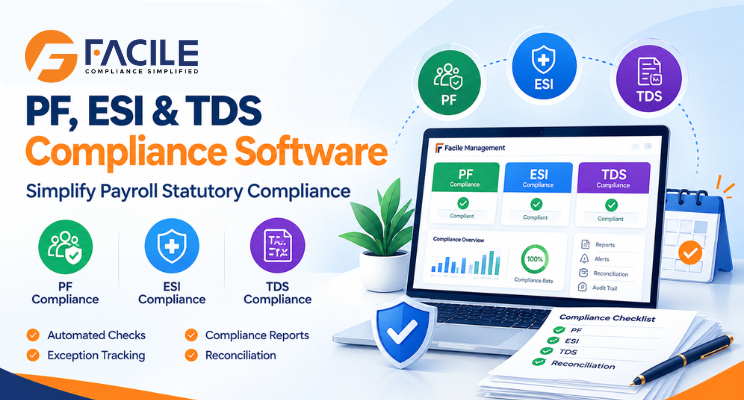
A centralized dashboard can provide a quick view of compliance status.
Example:
| Compliance Area | Status | Exceptions |
|---|---|---|
| PF | Completed | 2 |
| ESI | Completed | 1 |
| TDS | Review Required | 4 |
| Reconciliation | Completed | 0 |
Instead of manually searching through thousands of employee records, payroll teams can review exceptions identified by the system.
Each exception can be:
Identified → Assigned → Reviewed → Corrected → Closed
Generate reports for:
Maintain a history of compliance checks and actions taken by authorized users.
This can help organizations understand how an exception was identified and resolved.
Import or integrate employee and payroll information.
Review employee information required for applicable statutory calculations.
The system evaluates payroll information against configured compliance rules.
Potential discrepancies are displayed on the compliance dashboard.
Payroll or HR users investigate and correct applicable records.
Create compliance and audit reports for internal review and record keeping.
A payroll compliance tool should help teams review:
Automate repetitive compliance checks instead of maintaining multiple spreadsheets.
Bring potential discrepancies into a centralized exception dashboard.
HR and finance teams can monitor PF, ESI and TDS from a common interface.
Compare payroll and compliance data systematically.
Maintain reports and audit history for internal review.
A structured compliance platform can help organizations manage larger employee populations and more complex payroll operations.
Facile Management helps organizations simplify HR and payroll processes with technology-driven compliance management.
A PF, ESI & TDS compliance solution can bring key payroll compliance activities into a centralized platform, helping HR and payroll teams move from manual tracking toward a more organized compliance workflow.
PF + ESI + TDS + Payroll Audit + Reconciliation + Compliance Tracking
Make payroll compliance simpler with Facile Management.
PF ESI TDS compliance software is a payroll compliance solution that helps organizations monitor Provident Fund, Employee State Insurance and salary TDS-related payroll activities.
It can help payroll teams validate PF-related employee and payroll information, identify potential exceptions, reconcile records and generate compliance reports.
It helps organizations manage and review ESI-related employee information, contribution records and compliance activities.
Yes. Payroll compliance software can help validate salary, taxable income, deductions and TDS information. The software should be updated to reflect applicable tax rules and statutory changes.
The Income Tax Department specifically states that salary TDS for payments from April 1, 2026 is governed by the Income Tax Act, 2025.
Yes. A unified payroll compliance platform can bring PF, ESI and TDS monitoring into one dashboard instead of requiring teams to maintain separate spreadsheets and tracking systems.
This depends on the software’s integrations and capabilities. Some platforms support statutory reports, data preparation and filing workflows, while others focus primarily on compliance monitoring and auditing.
Yes. Rule-based validation can flag potential discrepancies in employee data, deductions, contributions, tax calculations and reconciliation records for review.
It can reduce manual checking, centralize compliance information, provide alerts, track exceptions and create reports for payroll and finance teams.
It can be useful when a business has recurring payroll compliance requirements, multiple employees, multiple locations or limited resources for manual compliance checking.
Yes. Depending on the platform, reports can include PF, ESI, TDS, reconciliation, exception and audit information.
No. Software can automate checks and workflows, but payroll and compliance professionals remain important for reviewing exceptions, interpreting requirements and taking corrective action.


Facile Management Services (OPC) Private Limited is committed to delivering seamlessly integrated HR and compliance solutions designed for the evolving