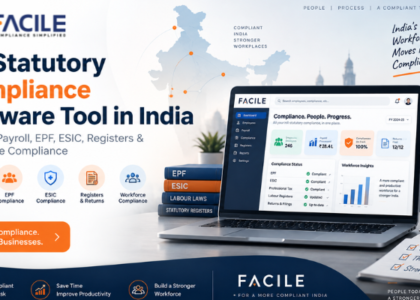


Managing establishment compliance involves much more than obtaining a registration certificate. Businesses must continuously monitor registrations, renewals, statutory returns, labour-law obligations, employee records, registers, licences, inspections, notices, documents and compliance deadlines.
An Establishment Compliance Application helps organisations bring these requirements into one structured platform so HR, compliance and management teams can monitor obligations across establishments, States and business locations.
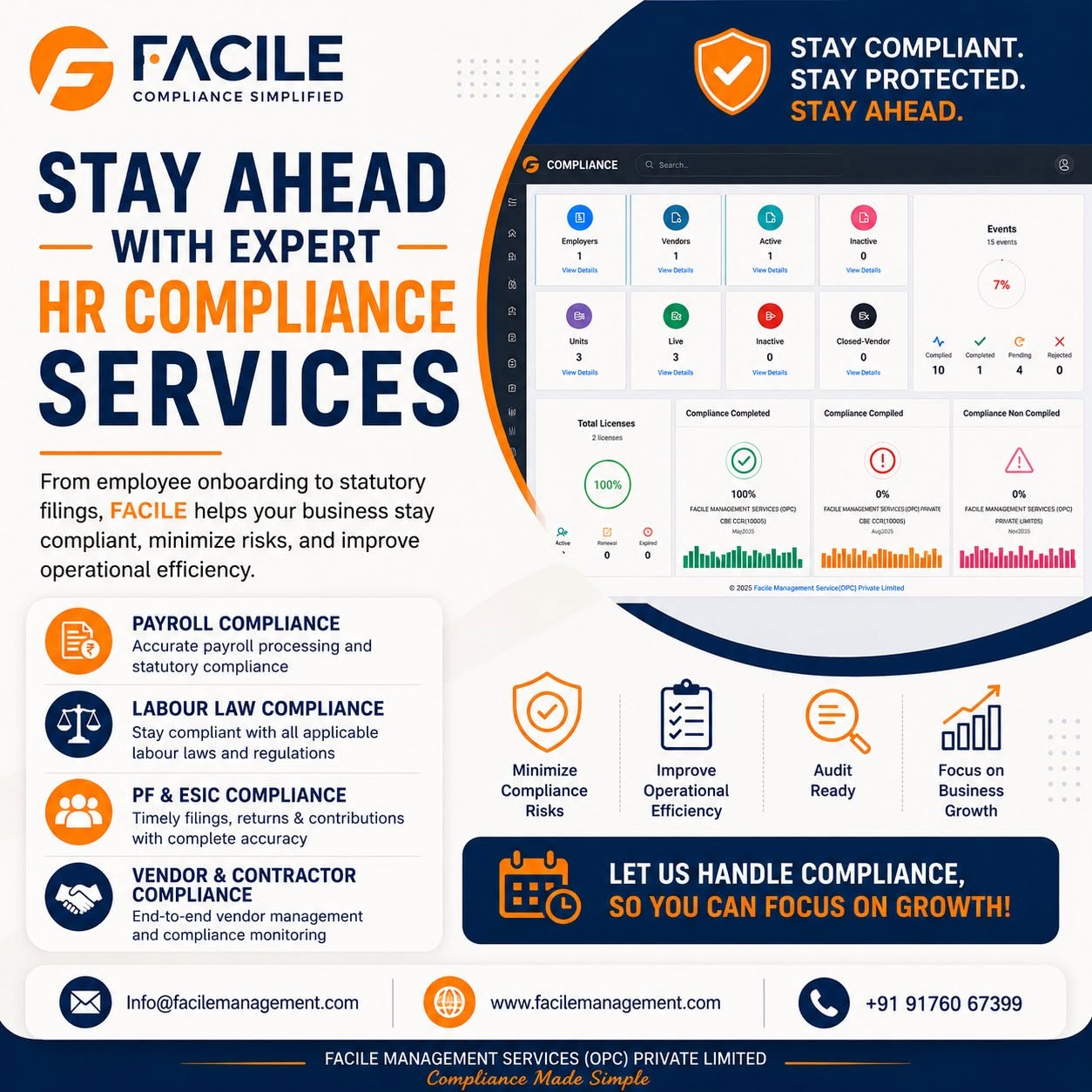
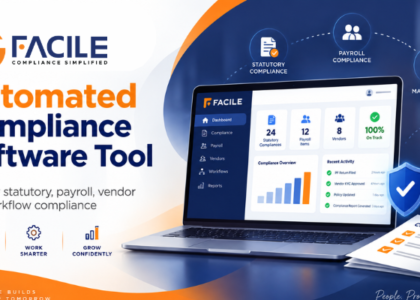
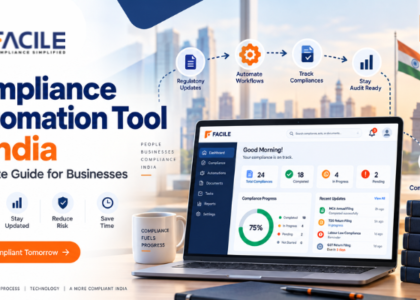
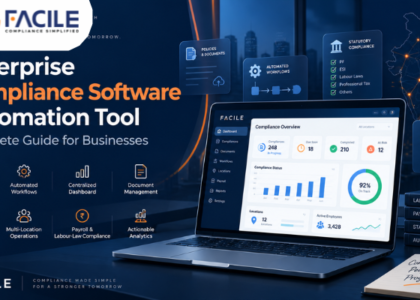
FACILE’s existing establishment-compliance offering covers areas such as Shop & Establishment registration, renewals, statutory return filing, inspection support, consultation and compliance across applicable labour laws. Its compliance tool also provides calendars, statutory registers, document storage, dashboards and payroll/attendance integration.
An Establishment Compliance Application is a digital platform used to manage statutory and labour-law requirements applicable to offices, shops, commercial establishments, branches and other business locations.
It helps organisations maintain visibility over:
Instead of maintaining separate spreadsheets, emails and physical files, organisations can use a central system to monitor their establishment compliance.
Businesses operating from multiple offices or branches often face different State-specific compliance requirements.
Requirements may vary according to:
Manual tracking can lead to missed renewals, outdated registrations, delayed returns or incomplete statutory records.
An Establishment Compliance Application helps businesses organise these requirements and maintain a structured compliance trail.
The application should help organisations maintain registration information for every location.
Important details may include:
A central registration repository makes it easier to track multiple establishments.
Shops and Establishments requirements differ across States.
A compliance application should help businesses monitor applicable requirements relating to:
Businesses operating across several States particularly benefit from State-wise compliance mapping.
Registrations and licences may have different expiry dates.
The application should maintain:
Early reminders help businesses avoid expired registrations and licences.
A central compliance calendar is one of the most important features.
It should display:
FACILE’s current establishment compliance tool includes a compliance calendar and due-date alerts as part of its platform.
Businesses may need to submit monthly, quarterly, half-yearly or annual returns depending on the law and jurisdiction.
The application should help manage:
FACILE’s current establishment compliance service includes statutory return preparation and filing support.
Maintaining prescribed registers is a critical part of labour-law compliance.
Depending on applicable law, registers may relate to:
A compliance application should help organisations maintain and retrieve statutory registers when required.
Compliance activities generate many documents.
The application should provide a central repository for:
FACILE currently describes secure compliance-document storage as part of its establishment compliance tool.
Management should be able to understand compliance status without reviewing every individual record.
A dashboard can display:
This improves visibility for management and compliance teams.
An organisation operating in multiple States must manage different rules and requirements.
The application should provide State-wise visibility for:
This reduces dependence on separate State-specific trackers.
Not every labour law applies equally to every establishment.
Applicability may depend on:
A good system should map applicable statutory requirements against each establishment.
Compliance teams should receive reminders before important due dates.
Useful alerts include:
Escalations can also notify managers when activities remain incomplete.
Government inspections may require businesses to produce documents at short notice.
An Establishment Compliance Application should help maintain:
FACILE’s existing offering specifically includes support for inspections, audits and regulatory challenges, along with audit-ready reports.
All establishment-related obligations can be viewed from one system instead of scattered spreadsheets and email chains.
Teams spend less time manually checking due dates and maintaining separate compliance trackers.
Dashboards provide management with an overview of pending, completed and overdue activities.
Registration and licence-expiry tracking helps prevent missed renewals.
Compliance documents remain organised and easier to retrieve during audits or inspections.
Businesses can manage several branches, offices and establishments through one platform.
Historical records and supporting documents provide a stronger compliance trail.
Multi-location organisations may have hundreds of compliance requirements across different States.
For example:
Corporate Office → State A
Branch Office → State B
Warehouse → State C
Regional Office → State D
Each establishment may have different registrations, labour-law requirements and due dates.
A central system can organise the compliance structure as:
Organisation → State → Establishment → Applicable Act → Compliance → Due Date → Document → Status
This makes compliance easier to monitor at both establishment and management levels.
Businesses should regularly check:
It can be useful for:
FACILE ONE provides businesses with a central platform for managing establishment and statutory compliance.
FACILE’s existing establishment-compliance solution supports registration and renewal management, statutory return filing, inspection assistance and compliance monitoring. Its tool also includes compliance calendars, statutory-register generation, document repositories, dashboards, payroll and attendance integration and audit-ready reporting.
Businesses can use FACILE ONE to support:
Managing establishment compliance manually becomes increasingly difficult as businesses expand into new locations and States.
FACILE ONE provides a structured framework where compliance teams can manage obligations location by location.
Before selecting an application, businesses should check whether the platform can support:
The right application should not only store compliance data but also provide clear visibility over what must be completed, where, when and by whom.
The best Establishment Compliance Application should help businesses manage registrations, renewals, statutory returns, labour-law requirements, documents, inspections and compliance deadlines from a single platform.
For organisations with multiple establishments or operations across India, FACILE ONE can provide centralised visibility over establishment compliance and help HR and compliance teams maintain a structured, audit-ready compliance process.
An Establishment Compliance Application is software used to manage registrations, licences, renewals, statutory returns, labour-law obligations, registers, documents and compliance deadlines for business establishments.
It helps businesses track statutory obligations, avoid missed deadlines, maintain compliance records and monitor multiple locations from a central system.
Yes. The application can help track registration, renewal, returns, registers and other applicable State-specific Shops and Establishments requirements.
Yes. Multi-state compliance is an important feature for organisations with offices or branches across India.
Yes. Registration details, expiry dates, renewal dates and supporting documents can be maintained and monitored.
Yes. It can help track applicable returns, filing frequencies, due dates, filing status and acknowledgement documents.
Yes. Depending on the platform and applicable law, statutory registers can be maintained or generated using employee, payroll and attendance information.
Yes. Registrations, licences, returns, notices, acknowledgements and other compliance documents can be organised centrally.
Yes. Centralised compliance records and audit-ready documents make it easier to retrieve information during an inspection.
Yes. Applications can provide alerts for due dates, renewals, returns and pending compliance activities.
Many requirements, particularly under State Shops and Establishments laws and other State-level provisions, can vary by jurisdiction. Multi-state businesses therefore need State-wise compliance tracking.
HR teams, legal teams, compliance departments, multi-location companies, SMEs and large enterprises can use it.
Yes. Dashboards can display completed, pending, overdue and upcoming compliance requirements.
Yes. FACILE ONE supports establishment compliance monitoring, registrations, renewals, statutory records, compliance calendars, documents, dashboards and multi-location compliance.


Facile Management Services (OPC) Private Limited is committed to delivering seamlessly integrated HR and compliance solutions designed for the evolving