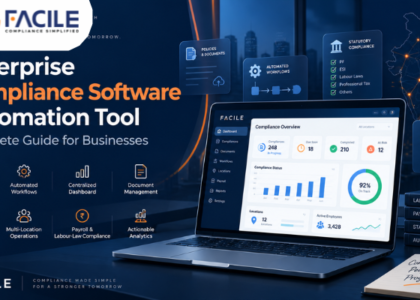


Managing payroll is no longer only about calculating salaries. Businesses also need to ensure that employee wages, deductions, statutory contributions, attendance, overtime, minimum wages, bonus, leave records, payslips, and contractor payroll data are accurate and compliant with applicable labour laws.
A Payroll Compliance Application helps organisations manage these requirements in a structured way by combining payroll validation, statutory compliance tracking, document management, alerts, dashboards, and audit support in one system.
For businesses operating across multiple units, vendors, contractors, and States, a dedicated payroll compliance application can significantly reduce manual work and improve visibility over statutory payroll obligations.
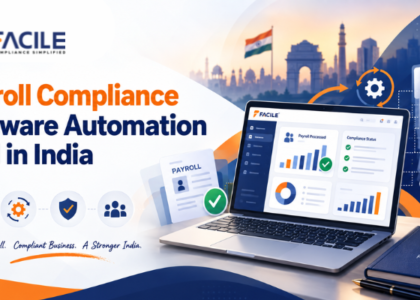
A Payroll Compliance Application is a software platform designed to help businesses monitor, validate, and manage payroll-related statutory requirements.
It can help HR, payroll, finance, compliance, and vendor-management teams check whether payroll processing is aligned with:
The main purpose is to reduce compliance gaps between payroll data and statutory obligations.
Payroll compliance becomes complex when an organisation has a large workforce, multiple locations, different wage categories, contractors, and State-specific labour-law requirements.
Manual payroll compliance often depends on spreadsheets, emails, payroll exports, and separate statutory records.
This can create problems such as incorrect wage mapping, missing statutory deductions, delayed contributions, incorrect attendance, inconsistent salary components, duplicate records, missing payslips, and poor audit visibility.
A Payroll Compliance Application helps centralise these activities and provides a structured compliance process.
The application should validate payroll records before statutory compliance is finalised.
It should help identify:
This improves payroll accuracy before compliance processing begins.
Minimum wage compliance is one of the most important payroll checks.
A good payroll compliance application should help compare employee wages with applicable minimum-wage requirements based on:
This helps organisations identify employees whose wages may fall below applicable statutory requirements.
EPF compliance requires accurate employee wages, UAN details, contributions, ECR data, challans, and payment records.
The application should help monitor:
This helps payroll and compliance teams identify differences between payroll records and EPF filings.
The system should help manage ESIC-related employee and contribution information.
Important checks can include:
This helps reduce incorrect or missing ESIC contributions.
Professional Tax varies across States.
A payroll compliance application should support State-wise Professional Tax requirements, including:
This is particularly important for organisations operating across multiple States.
Labour Welfare Fund requirements can differ by State.
The application should help businesses track:
This helps reduce missed State-specific obligations.
Payroll should be supported by accurate attendance records.
The application should allow businesses to compare payroll with:
Attendance mismatches can directly affect wage calculations and statutory compliance.
The application should support overtime validation based on applicable labour-law requirements.
Businesses should be able to monitor:
Accurate overtime records help reduce wage disputes and audit observations.
Payroll compliance involves multiple documents.
A good Payroll Compliance Application should help manage:
Centralised document management improves audit readiness.
Businesses engaging contractors need visibility over contractor payroll compliance.
The application should support checks relating to:
This helps principal employers reduce compliance risks across multiple vendors.
Payroll compliance becomes more challenging when employees work across multiple States.
Each location may involve different requirements relating to:
A centralised payroll compliance application helps businesses monitor these differences from one platform.
A payroll compliance dashboard gives management a clear view of overall compliance status.
The dashboard can show:
This helps management identify high-risk areas quickly.
Missed deadlines can result in penalties, interest, employee complaints, and compliance issues.
A payroll compliance application should support reminders for:
Timely alerts help teams complete statutory tasks within the required period.
A Payroll Compliance Application should support payroll audit workflows.
The system can help verify:
Compliance observations can then be recorded and tracked until closure.
The main benefits include improved payroll accuracy, stronger statutory control, better documentation, reduced manual work, and better visibility across employees and locations.
Businesses can also improve audit readiness, contractor monitoring, regulatory tracking, and corrective-action management.
FACILE ONE is designed to help businesses manage payroll compliance, statutory obligations, contractor compliance, document verification, and compliance monitoring in one platform.
FACILE ONE can support organisations with:
This makes it suitable for businesses managing complex payroll and compliance operations across India.
FACILE ONE brings payroll and compliance activities into a structured framework.
Instead of relying on multiple spreadsheets, emails, payroll files, and manual trackers, businesses can use one platform to monitor payroll compliance across employees, contractors, units, and States.
It helps HR, payroll, compliance, finance, and management teams work with the same compliance information.
A Payroll Compliance Application can be useful for:
When selecting payroll compliance software, businesses should evaluate whether the application supports Indian statutory requirements and can scale across multiple locations.
Important factors include payroll validation, minimum wage tracking, EPF and ESIC compliance, State-wise requirements, contractor monitoring, document management, audit workflows, compliance dashboards, and reporting.
The system should also provide enough flexibility to support organisation-specific payroll and compliance processes.
The best Payroll Compliance Application should do more than calculate salaries.
It should help organisations validate payroll, monitor statutory contributions, track minimum wages, manage payroll records, identify compliance gaps, support contractor compliance, and maintain audit-ready documentation.
For organisations operating across multiple States, units, and vendors, a centralised platform such as FACILE ONE can help simplify payroll compliance and improve visibility over statutory obligations.
A Payroll Compliance Application is software that helps businesses manage and validate payroll-related statutory requirements such as minimum wages, EPF, ESIC, Professional Tax, Labour Welfare Fund, overtime, attendance, deductions, and payroll records.
It helps organisations identify payroll errors, statutory contribution gaps, missing documents, minimum-wage issues, and compliance deadlines before they become regulatory problems.
It can support EPF, ESIC, Professional Tax, Labour Welfare Fund, minimum wages, overtime, bonus, payroll records, attendance, and other applicable labour-law requirements.
Yes. A good system can compare employee wages against applicable minimum-wage rates based on State, zone, designation, skill category, and effective date.
Yes. Payroll compliance applications can compare payroll records with EPF and ESIC contribution data, challans, employee details, and statutory filings.
Yes. Multi-state compliance support is an important feature because minimum wages, PT, LWF, and other requirements can vary across States.
Yes. Businesses can use payroll compliance software to monitor contractor wages, attendance, EPF, ESIC, payslips, payment proof, and statutory documents.
Not necessarily. Payroll software primarily calculates and processes salary, while payroll compliance software focuses on validating payroll against statutory and labour-law requirements. Some platforms can integrate both functions.
Yes. It can maintain supporting documents, compliance observations, payroll records, statutory contribution details, and corrective-action status for audit purposes.
Yes. Attendance data can be compared with payable days, leave, weekly offs, overtime, and salary calculations.
Yes. It can support compliance calendars, due-date tracking, reminders, and status monitoring for statutory obligations.
It is useful for HR teams, payroll teams, compliance departments, finance teams, factories, contractors, multi-location businesses, and organisations with large workforces.
A strong application should combine statutory compliance tracking, payroll validation, minimum wage monitoring, contractor compliance, document management, alerts, dashboards, and audit reporting.
Yes. FACILE ONE supports payroll compliance validation, statutory compliance monitoring, contractor compliance, minimum wage monitoring, document management, audit observations, and multi-location compliance.


Facile Management Services (OPC) Private Limited is committed to delivering seamlessly integrated HR and compliance solutions designed for the evolving