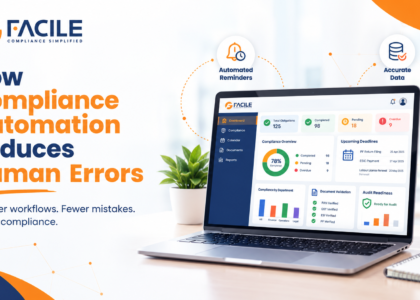
Managing regulatory requirements has become increasingly complex for businesses operating across multiple locations, industries, and workforce categories. From labour law compliance and payroll regulations to statutory filings, documentation, and audit readiness, organizations must manage numerous responsibilities while maintaining operational efficiency.
Traditional compliance management often relies on spreadsheets, manual reminders, email communication, and disconnected systems. These processes can lead to missed deadlines, inconsistent records, duplicate work, and increased compliance risks.
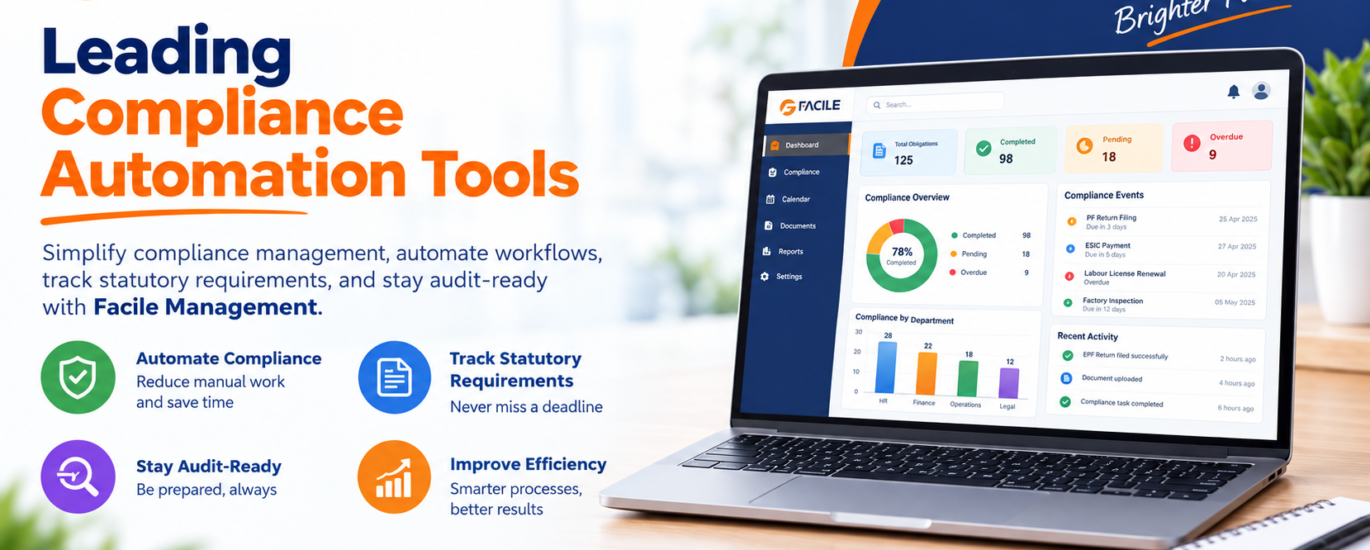
Leading compliance automation tools help organizations streamline these activities through centralized compliance tracking, automated reminders, digital documentation, workflow management, and reporting capabilities.
For businesses in India, compliance automation can be particularly useful for managing labour law obligations, payroll-related requirements, establishment compliance, factory compliance, contractor compliance, and multi-location operations.
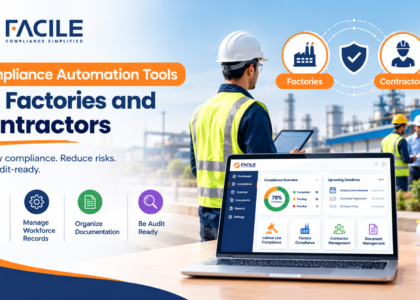
Compliance automation tools are software solutions designed to simplify and standardize regulatory and statutory compliance activities. They help organizations monitor obligations, assign responsibilities, track deadlines, maintain records, and generate reports from a centralized platform.
Depending on the solution, these tools may support:
The goal is to reduce repetitive administrative work and provide better visibility into compliance responsibilities.
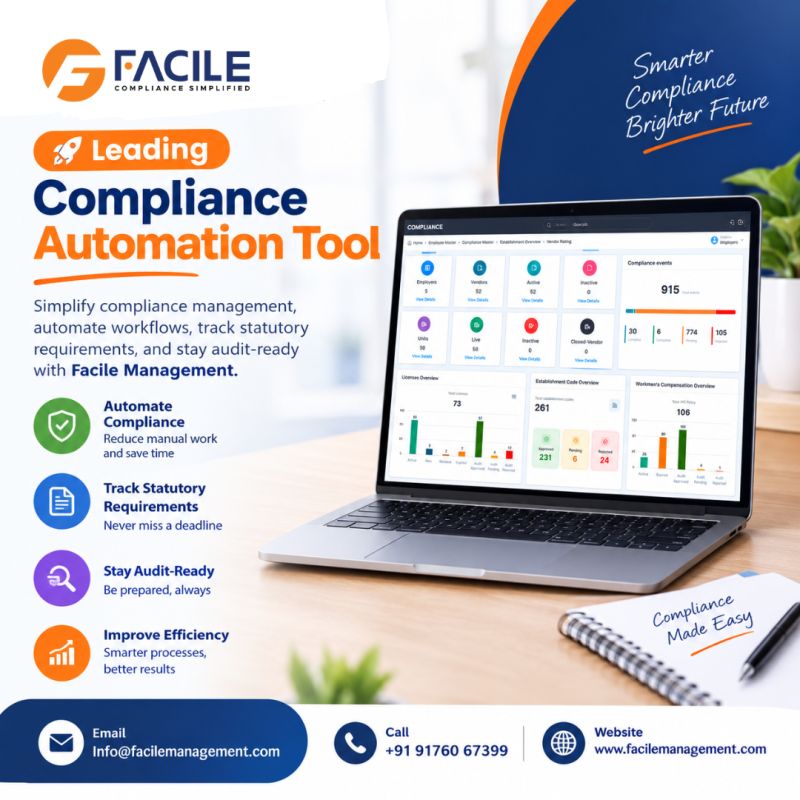
Businesses may need to comply with different requirements depending on their location, industry, workforce structure, and applicable laws. A centralized compliance platform helps teams organize obligations and monitor their completion.
Manual tracking can result in incorrect entries, forgotten tasks, and inconsistent documentation. Automation can standardize recurring workflows and reduce dependence on individual follow-ups.
Missed compliance deadlines can create financial, operational, and legal exposure. Automated reminders, escalation workflows, and status dashboards help teams identify upcoming and overdue activities.
Maintaining organized records and supporting documents makes it easier to review completed activities, identify gaps, and prepare for internal or external audits.
Organizations with offices, factories, establishments, vendors, or contractors across multiple locations can benefit from centralized visibility and location-specific compliance tracking.
A compliance calendar organizes recurring obligations, due dates, assigned owners, and completion statuses. It helps teams plan activities and monitor upcoming responsibilities.
Notifications can remind responsible employees about upcoming deadlines. Escalation workflows can help managers identify tasks that remain incomplete.
For Indian businesses, relevant capabilities may include tracking applicable labour law obligations, maintaining statutory records, managing returns and registers, and organizing compliance evidence. Applicability should be determined based on the organization’s circumstances and current legal requirements.
Integration with payroll systems can help coordinate employee data, payroll calculations, statutory deductions, payment records, and related reporting workflows. The exact capabilities depend on the software and applicable requirements.
A centralized document repository can help teams store, retrieve, and organize licences, certificates, returns, registers, challans, acknowledgements, and other supporting records.
Audit trails can record task updates, approvals, and document changes. Dashboards and reports help management review completion rates, pending activities, overdue tasks, and potential compliance gaps.
Businesses that engage contractors or third-party service providers may need to monitor documentation, workforce-related obligations, and other applicable requirements. Dedicated workflows can improve coordination and visibility.
The platform should support the organization’s number of locations, users, legal entities, and compliance responsibilities. Role-based permissions and appropriate security controls help protect sensitive information.
Different organizations may require different tools depending on their compliance needs.
These platforms typically support centralized risk, policy, regulatory, and compliance workflows across departments or business units.
These solutions focus on applicable statutory obligations, compliance calendars, registers, returns, records, and location-specific requirements.
These tools help coordinate payroll processes, employee information, statutory calculations, reporting, and related HR workflows.
These platforms support audit planning, evidence collection, issue tracking, risk assessments, and remediation activities.
These tools help organizations coordinate vendor documentation, contractor-related compliance tasks, and monitoring processes.
Some platforms cover several categories, while others specialize in a particular function.
Selecting the right platform requires an assessment of your business structure, regulatory obligations, existing systems, and operational priorities.
Consider the following factors:
Before making a decision, request a demonstration based on realistic compliance scenarios and verify the specific capabilities included in the proposed solution.
Compliance automation can deliver several operational benefits when implemented correctly.
Automation supports compliance management, but it does not independently guarantee legal compliance. Organizations must still validate legal applicability, maintain accurate information, review regulatory changes, and ensure that required actions are completed.
Businesses should also plan for potential implementation challenges.
Incorrect employee, establishment, contractor, or registration information can affect workflow accuracy. Data validation should be part of implementation.
Automation works best when each obligation has an accountable owner, a defined approval process, and a clear escalation path.
Employees may need training and practical guidance to transition from spreadsheets and email-based processes to a centralized platform.
Software alone cannot ensure that every obligation is correctly interpreted or applicable. Businesses should establish a process for reviewing regulatory updates and validating requirements with qualified compliance professionals.
Before implementation, assess how the platform exchanges information with existing HR, payroll, accounting, and enterprise systems.
As businesses expand, the number of employees, locations, vendors, and compliance activities may increase. Manual systems can become harder to maintain at scale.
Compliance automation creates more structured processes by centralizing information, standardizing workflows, and improving management visibility. It can help businesses build repeatable compliance practices while allowing teams to focus more time on review, exception handling, and operational improvement.
The most effective approach combines appropriate technology, reliable data, defined accountability, regular legal review, and trained personnel.
Leading compliance automation tools can help businesses simplify labour law compliance, coordinate payroll-related activities, manage statutory deadlines, organize documentation, and improve audit readiness.
When evaluating a solution, organizations should prioritize relevant compliance coverage, reliable regulatory updates, workflow automation, reporting, integration, security, and ongoing support.
For Indian businesses, choosing a solution aligned with their industry, locations, workforce structure, and applicable legal requirements is essential. With the right combination of technology and professional oversight, compliance automation can become a practical foundation for more efficient and consistent compliance management.
Compliance automation tools are software solutions that help businesses track regulatory obligations, manage deadlines, organize documents, assign compliance tasks, and generate reports through centralized workflows.
Common benefits include reduced manual work, better deadline tracking, improved documentation, clearer task ownership, enhanced reporting, and better visibility into potential compliance gaps.
The right tool depends on the organization’s industry, size, workforce, locations, and applicable regulations. Businesses should evaluate solutions that support their required labour law, statutory, payroll, audit, and contractor compliance workflows.
Yes. Depending on their capabilities, these tools can help track applicable obligations, maintain compliance calendars, organize statutory records, monitor deadlines, and manage supporting documentation. Organizations must still validate legal applicability and complete the required actions.
Some solutions integrate with payroll and HR systems to coordinate employee information, statutory calculations, reporting, and related workflows. Integration capabilities vary by provider and should be confirmed before purchase.
Automation can reduce risks associated with missed reminders, unclear ownership, inconsistent records, and manual tracking. It supports risk management but cannot guarantee compliance or eliminate every legal or operational risk.
Yes. Small and medium-sized businesses can benefit from centralized tracking, automated reminders, organized documentation, and standardized processes, particularly when internal compliance resources are limited.
Businesses should assess compliance coverage, regulatory update processes, workflow automation, integration, reporting, security, usability, implementation support, and overall cost.
Yes. Suitable platforms can provide centralized oversight while tracking location-specific obligations, responsible teams, deadlines, and documentation.
No. Automation helps manage workflows and information, while compliance professionals provide interpretation, validation, oversight, and decision-making for complex or changing legal requirements.

Facile Management Services (OPC) Private Limited is committed to delivering seamlessly integrated HR and compliance solutions designed for the evolving